Beyond the Incense: Correcting What Americans Misunderstand About Orthodox Christianity
There is a particular kind of discomfort that comes with being perpetually misidentified. Ask any Polish Orthodox Christian in the United States and they will likely describe a version of the same experience: the well-meaning neighbor who assumes they attend Mass, the curious coworker who believes icons are essentially the same as Catholic statues, or the podcast-educated acquaintance who conflates Eastern Orthodoxy with Russian nationalism. These misunderstandings are rarely malicious. They are, however, consequential — both for interfaith dialogue and for the integrity of a tradition that deserves to be understood on its own terms.
This essay is written in a spirit of charitable correction. It does not aim to diminish other Christian traditions, nor to claim superiority for the Orthodox way. It aims, simply, to clarify.
Icons Are Not Decorations, and They Are Not Idols
Perhaps no aspect of Orthodox Christianity generates more confusion among Western Americans than iconography. The question arrives with remarkable regularity: are icons not a form of idol worship? The concern is understandable given the Protestant heritage that shapes so much of American religious culture, where images in worship spaces have historically been viewed with deep suspicion.
The Orthodox theological position on icons was settled — after considerable controversy — at the Seventh Ecumenical Council in 787 AD. The Council drew a precise and theologically significant distinction between latreia (the worship due to God alone) and proskynesis (the veneration offered to holy persons and sacred objects). To venerate an icon is not to worship the painted wood. It is to honor the person depicted and, through that person, to direct one's devotion toward God.
For Polish Orthodox believers, icons carry an additional layer of cultural meaning. The iconographic tradition as practiced in the Polish Orthodox Church — which draws on both Byzantine and local folk artistic influences — reflects centuries of theological reflection expressed through visual language. When a Polish Orthodox family hangs an icon of the Theotokos in their home, they are not decorating. They are establishing a sacred threshold, a reminder that the boundary between the earthly and the heavenly is thinner than secular modernity would have us believe.
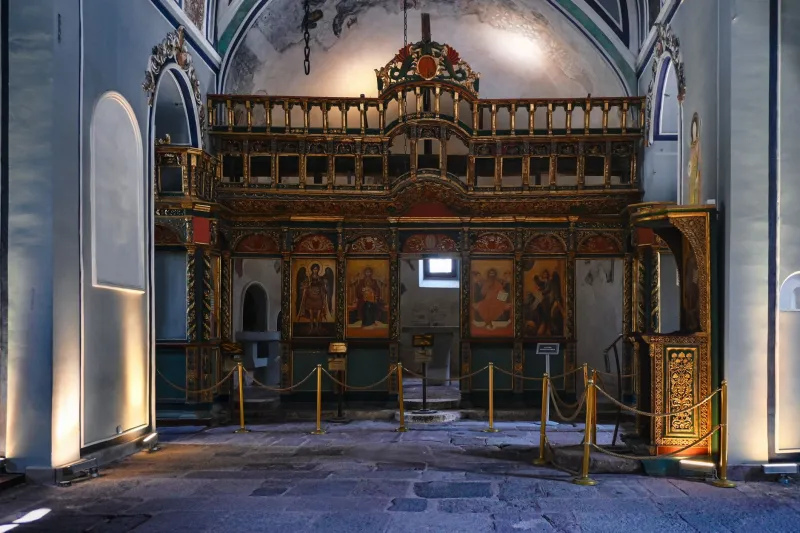
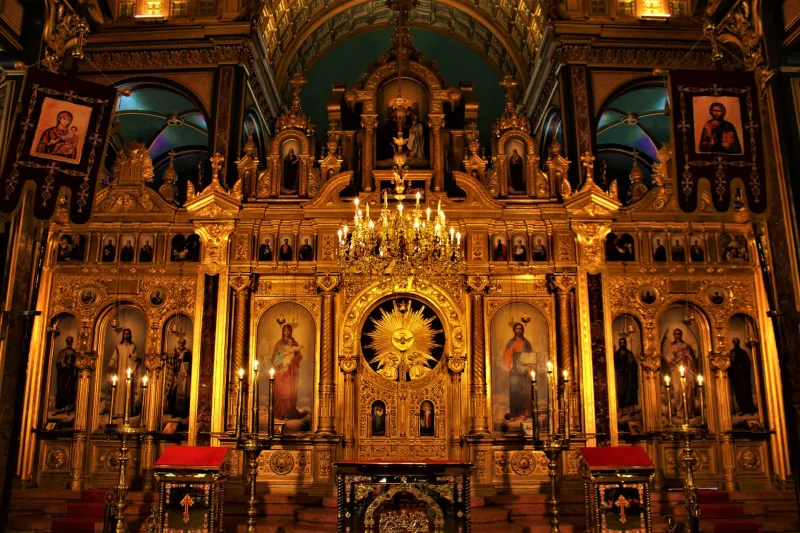
To walk into an Orthodox church and remark that it "looks like a Catholic church" is, with respect, to miss the point entirely. The iconostasis — the icon-bearing screen that separates the nave from the altar — is not architectural decoration. It is a theological statement about the nature of divine mystery and the proper posture of the faithful before it.
Fasting Is Not Dieting, and It Is Not Punishment
Western observers who encounter the Orthodox fasting calendar for the first time frequently respond with one of two reactions: admiration tinged with bewilderment, or gentle skepticism that such rigorous practice can be spiritually meaningful rather than merely performative. Both reactions, while understandable, rest on a fundamental misreading of what fasting means within the Orthodox tradition.
The Orthodox calendar includes four major fasting periods, the most significant of which is Great Lent — the forty-day preparation for Pascha (Easter). During these periods, the faithful abstain from meat, dairy, fish (on most days), oil, and wine according to a rule that varies somewhat by local tradition and individual circumstance. This is, by any measure, a demanding practice. In a culture saturated with the language of dietary choice and personal wellness, it is tempting to interpret Orthodox fasting through the lens of nutritional self-improvement.
To do so is to misunderstand it entirely.
Fasting in the Orthodox tradition is an ascetic discipline — a deliberate mortification of the body in service of the soul's orientation toward God. It is not punitive. It is pedagogical. The hunger one experiences during a fast is not an end in itself; it is a teacher, reminding the faithful that the deepest human hunger is not for bread but for communion with the divine. Saint John Chrysostom, one of the great theologians of the Eastern Church, wrote that fasting from food without fasting from sin is merely an exercise in self-deprivation. True fasting, he argued, must encompass the whole person — the tongue, the eyes, the hands, and the heart.
For Polish Orthodox communities, the fasting tradition is also deeply communal. Parish life during Great Lent takes on a distinctly different character: Presanctified Liturgies on Wednesday and Friday evenings, increased attendance at Vespers, and the preparation of traditional fasting foods that have been passed down through generations. The Polish Orthodox kitchen during Lent — with its żurek (sour rye soup), its dried mushroom dishes, its honey-sweetened buckwheat — is itself a form of embodied theology.
The Polish Orthodox Tradition Is Not Simply "Russian Orthodoxy with Polish Names"
This distinction matters enormously, and it is one that even well-informed Americans often fail to grasp. The Orthodox Church in Poland has a history and identity that is distinct from the Russian Orthodox Church, even though the two share the same theological and liturgical inheritance. The Polish Autocephalous Orthodox Church, which received its autocephaly (ecclesiastical independence) in 1924, represents a tradition shaped by the specific historical, cultural, and linguistic context of the Polish lands.
For Orthodox Poles in America, this distinction is not merely academic. It is a matter of identity. During the Cold War era, Polish Orthodox communities in the United States were sometimes viewed with suspicion by American authorities who conflated Eastern Orthodoxy with Soviet influence — a conflation that was both historically ignorant and personally harmful to families whose ancestors had fled Tsarist and later Soviet oppression. The irony was not lost on these communities.
Polish Orthodox liturgical practice incorporates elements that reflect this distinct heritage: the use of the Polish language alongside Church Slavonic, particular saints venerated in the Polish tradition (including Saint Andrew Bobola and the martyrs of Podlasie), and folk customs that reflect the cultural landscape of northeastern Poland. These are not superficial variations. They are expressions of a living tradition that has adapted to its context without abandoning its theological core.
An Invitation, Not a Rebuke
Orthodox Christianity asks a great deal of those who embrace it — intellectual humility, liturgical patience, and a willingness to encounter the sacred on terms that are not always comfortable or immediately comprehensible. For Americans accustomed to a religious culture that prizes accessibility and emotional immediacy, this can feel disorienting.
But disorientation, the Orthodox tradition would suggest, is sometimes precisely the point. The Divine Liturgy was not designed to be immediately legible to the uninitiated. It was designed to draw the faithful into a reality larger than themselves, to attune them — gradually, over years and decades of practice — to a mode of perception that transcends the merely rational.
For Polish Orthodox believers in America, the invitation extended to curious outsiders is genuine and warm. Come and see. Attend a Liturgy. Ask your questions. The tradition has survived centuries of persecution, political upheaval, and cultural pressure. It can withstand your curiosity — and it may, in time, have something to offer you that you did not know you were seeking.