Where Prayer Meets the Pantry: American Orthodox Monasteries and the Sacred Work of Polish Culinary Memory
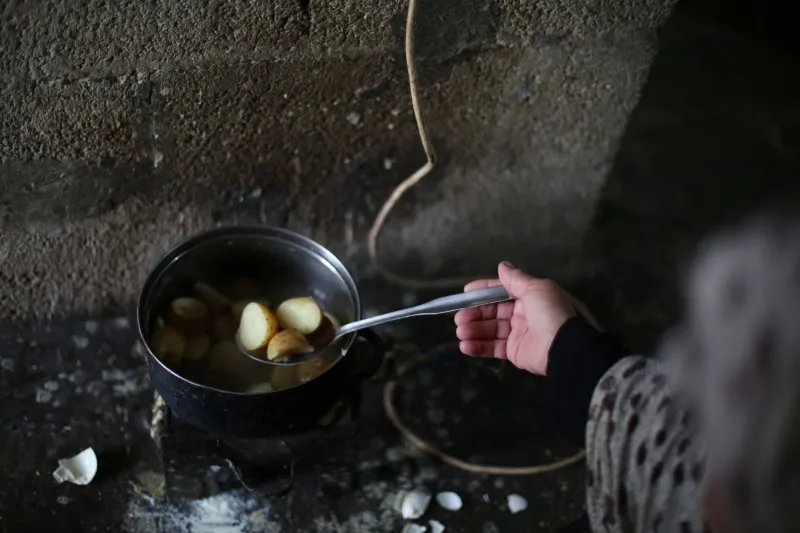
In the American imagination, the monastery is a place of silence, candlelight, and chanted prayer. It is rarely imagined as a place where the fate of a culture's culinary memory is quietly being decided. Yet in a handful of Orthodox monastic communities scattered across Pennsylvania, New York, and the upper Midwest, something remarkable is unfolding in rooms that smell of beeswax and slow-simmered beet broth. The kitchens of these monasteries — many of them rooted in the Polish Orthodox immigrant experience — are becoming some of the most consequential archives of traditional foodways in the country.
This is not an accident. It is, in a very real sense, the fruit of theology.
The Fasting Table as Theological Document
Orthodox Christianity structures the liturgical year around an intricate calendar of fasts and feasts, and nowhere is that rhythm more concretely expressed than at the monastic table. For communities with Polish heritage, this calendar carries a second layer of meaning: it encodes the agricultural cycles, regional ingredients, and domestic rituals of a world that no longer exists in quite the same form anywhere in Poland itself.
Father Seraphim, a hieromonk at a small skete in central Pennsylvania whose community traces its roots to Polish Orthodox immigrants who arrived in the Anthracite coal region in the early twentieth century, describes the kitchen as "a kind of living typikon." The typikon, in Orthodox practice, is the rule book governing liturgical life. His choice of the word is deliberate. "When we prepare the Lenten table according to the old way," he explains, "we are not simply following a recipe. We are enacting a theology of time, of the body, of creation. The recipe is inseparable from the prayer."
The dishes he references — żur, a sour rye soup prepared without meat or dairy during the Great Fast; kisiel, a tart oat-based pudding once common in the Carpathian borderlands; and various preparations of pickled mushrooms gathered from surrounding woodlands — are virtually unknown in contemporary American Polish communities, and even increasingly rare in Poland itself. The monastery has preserved them not through deliberate archival effort, but because the liturgical calendar demanded it, year after year, generation after generation.
Inheritance Without a Museum
What distinguishes monastic culinary preservation from institutional food history efforts is precisely its unselfconsciousness. The sisters at a women's monastic community in upstate New York — a community with roots in the Lemko Orthodox diaspora, a population historically claimed by both Polish and Ukrainian heritage — do not think of themselves as curators. They think of themselves as nuns keeping a fast.
Yet the knowledge held in their kitchen is extraordinary. Mother Nektaria, the abbess, can describe in precise detail the difference between the mushroom-drying techniques of her community's founding mothers and those practiced in neighboring villages in the Carpathian highlands. She knows which wild plants can supplement the Lenten table without breaking the fast, knowledge passed to her not through any written text but through direct instruction from the elderly monastic who trained her. "We did not write it down," she says. "We learned it by standing beside someone and doing it. That is how it was always passed on."
This oral and embodied transmission is both the great strength and the great vulnerability of monastic culinary heritage. It is authentic precisely because it was never performed for an outside audience. But it is also fragile, dependent on the continuity of monastic community life and on the presence of elders who carry the oldest knowledge.
Why American Monasteries Became Unexpected Guardians
The historical circumstances that placed this culinary heritage in American hands rather than Polish ones deserve careful consideration. The disruptions of the twentieth century — two world wars, the imposition of Soviet-aligned governance in Poland, and the particular pressures placed on the Greek Catholic and Orthodox communities of the eastern borderlands — scattered the populations who had practiced these traditions for centuries. Many landed in American industrial cities, and a portion of them eventually found their way into, or helped establish, Orthodox monastic communities.
Those communities, operating according to the ancient rhythms of monastic life, became inadvertent time capsules. While the broader Polish-American community gradually assimilated, adopting American dietary habits and losing the seasonal discipline of the Orthodox fasting calendar, the monasteries continued cooking as they always had. The very conservatism of monastic life — its resistance to novelty, its insistence on received tradition — turned out to be a form of cultural conservation.
Dr. Anna Kowalczyk, a food historian at a university in the mid-Atlantic region who has spent several years documenting Orthodox monastic foodways in the United States, puts it plainly: "If you want to understand what a Polish Orthodox peasant household in the Lemko region ate during Holy Week in 1890, your best primary source is not a museum. It is a functioning monastery in Pennsylvania or New York."
The Theological Stakes of the Kitchen
For the monastics themselves, framing their kitchen work as cultural preservation would feel incomplete, even slightly beside the point. The deeper motivation is theological. Orthodox Christianity has always insisted on the sanctification of the material world, and the preparation of food — particularly food governed by the fasting rule — is understood as a participation in that sanctification.
Father Seraphim speaks of the act of preparing Lenten dishes as a form of prayer in itself, a claim that would have been entirely familiar to the generations of women who cooked in Polish Orthodox households before him. "The kitchen is not separate from the church," he says. "It is the church extended into the home, into the body. What we eat, and how we prepare it, shapes who we are before God."
This perspective reframes the question of culinary preservation entirely. The monastery is not preserving recipes because recipes are historically interesting. It is preserving a way of inhabiting the world — a set of bodily disciplines and material practices that express a particular understanding of creation, time, and the human person.
An Invitation and a Warning
For Polish-American Orthodox Christians — and for the broader American public interested in authentic cultural heritage — the monastic kitchen represents both an invitation and a warning. The invitation is to engage with these communities, to learn from them, to support the monastic life that makes their work possible. Several communities have begun hosting retreats and open days during which visitors can participate in communal meal preparation, an initiative that has proven deeply meaningful for younger Polish-Americans searching for a connection to their heritage that transcends genealogy charts and folk costume.
The warning is that this heritage is not inexhaustible. Monastic communities require vocations to survive, and vocations require a broader culture of faith that nurtures them. If the Polish Orthodox communities of America continue to thin and assimilate, the monasteries that depend on their support will face increasing difficulty. And when those kitchens fall silent, something irreplaceable will be lost — not simply a collection of recipes, but a living theology of the table that has survived wars, deportations, and a century of exile.
The pantry, it turns out, has always been a kind of sanctuary. It is time for American Orthodox Christians to treat it as one.