Bread, Prayer, and Doctrine: The Unrecognized Theological Work of Polish Orthodox Women in America
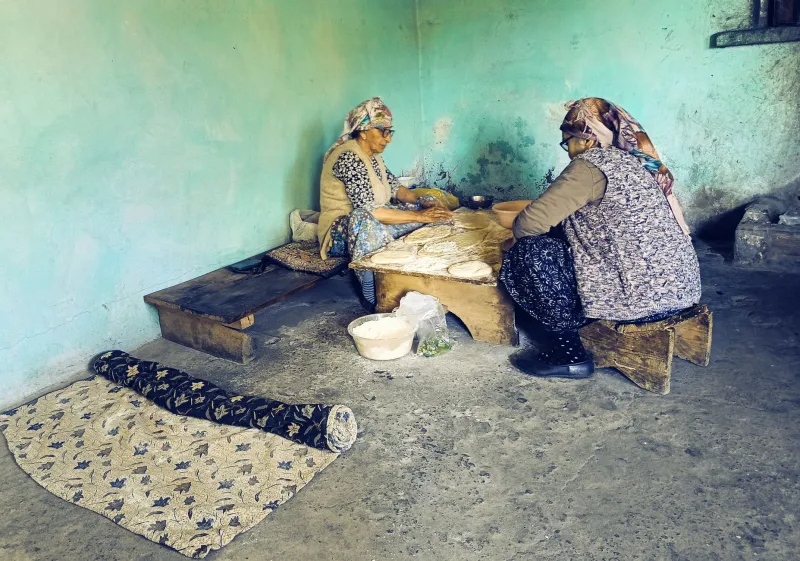
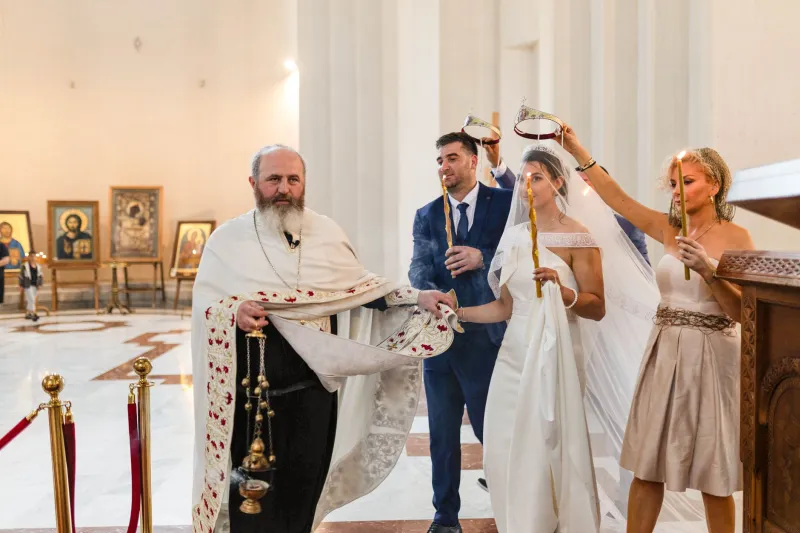
In the basement of a Polish Orthodox parish in northeastern Pennsylvania, a woman in her late seventies arranges prosfora — the leavened loaves used in the Divine Liturgy — with a precision that reflects decades of practice. She learned the method from her mother, who learned it from hers, in a chain of transmission stretching back to villages along the Bug River. She does not hold a seminary degree. She has never been ordained. Yet the theology she carries in her hands, her recipes, and her memory is as rigorously Orthodox as anything taught in a formal classroom.
This is not an isolated portrait. Across the United States — from Chicago's South Side to the mill towns of New England, from suburban parishes in New Jersey to emerging communities in the Pacific Northwest — Polish Orthodox women have functioned as the primary custodians of doctrinal continuity, liturgical culture, and communal identity. Their labor has been indispensable. Their intellectual contribution has been largely invisible.
That invisibility deserves to end.
The Kitchen as Sacred Space
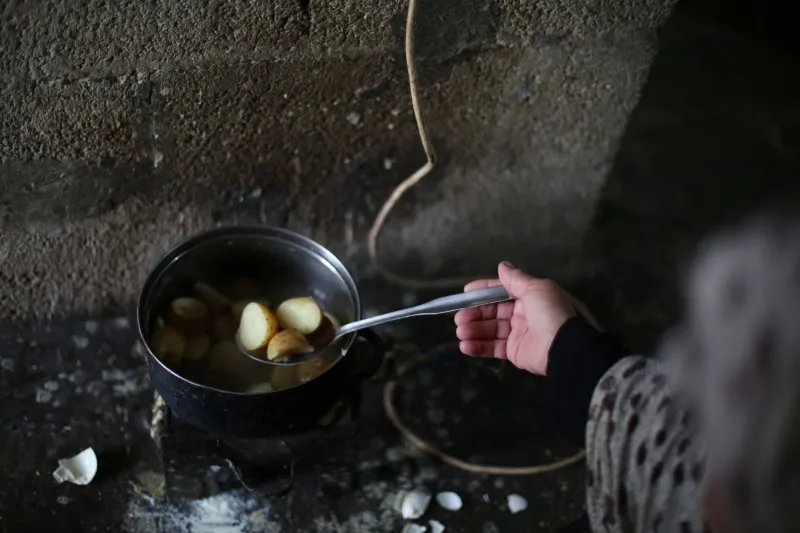
To understand the theological significance of the parish kitchen, one must first set aside the secular assumption that cooking and doctrine occupy separate registers of human activity. In Orthodox Christianity, no such separation exists. The preparation of liturgical bread, the observance of fasting disciplines, the crafting of kutia for the Christmas vigil, and the baking of paska for Pascha are not peripheral customs — they are embodied expressions of doctrinal conviction. They enact the theology of the Incarnation, the rhythm of the liturgical calendar, and the communal nature of salvation.
When a Polish Orthodox grandmother teaches her granddaughter to prepare beet-based barszcz for Christmas Eve — ensuring it contains no meat, no dairy, and is served only after the appearance of the first star — she is transmitting a complex theological argument about fasting, eschatological anticipation, and the sanctification of time. She does so without footnotes. She does so through repetition, correction, and love.
Several matriarchs interviewed for this article described the kitchen not merely as a place of utility but as a space of formation. "When I was learning to make the bread for liturgy," recalled one woman who has served her Philadelphia-area parish for over forty years, "my mother told me that every fold was a prayer. She wasn't being poetic. She meant it literally. The bread is going to become something holy. You have to approach it that way from the beginning."
This understanding — that material preparation participates in sacramental reality — reflects a coherent Orthodox theology of matter and grace. It is, in a precise sense, an applied epiclesis: an invocation of the Holy Spirit embedded in physical labor.
Altar Societies and the Architecture of Parish Life
Beyond the kitchen, Polish Orthodox women have historically organized and sustained the institutional architecture of American parish life through altar societies and women's auxiliaries. These organizations, often dismissed as social clubs in popular memory, have in practice served as the administrative, financial, and catechetical backbone of numerous communities.
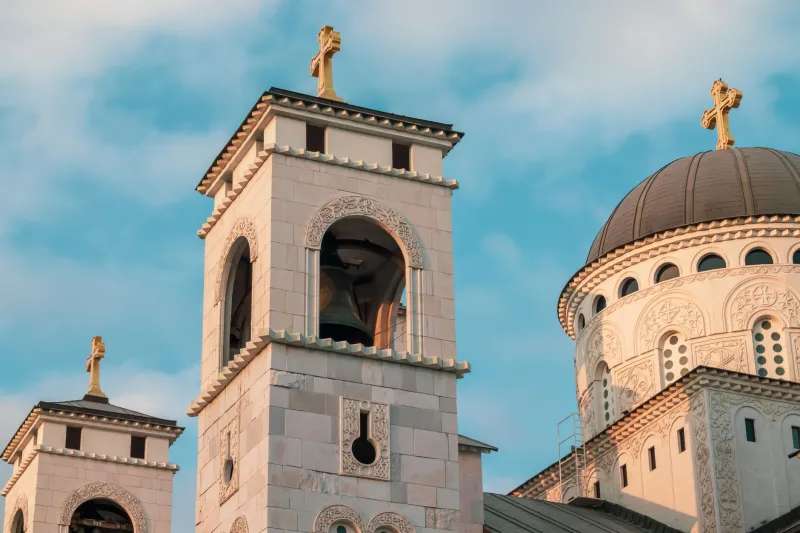
In many parishes established by Polish Orthodox immigrants during the late nineteenth and early twentieth centuries, it was the women's auxiliary that raised funds for the initial construction of the church building, maintained the iconostasis through regular cleaning and restoration, and ensured that the parish school remained operational during periods of financial hardship. Their organizational competence made visible Orthodox witness possible in the New World.
Yet their theological contribution extended beyond logistics. Women leading altar societies frequently made consequential decisions about which icons would be commissioned, which feast days would receive special observance, and how liturgical vessels would be cared for. These are not administrative choices. They are choices about what the parish will look like, what it will remember, and what it will teach its children about the nature of God and the communion of saints.
"People think we just cleaned the candlestands," said one longtime member of an altar society in Connecticut, with a measured smile. "We decided which saints would be painted on the walls. We decided which prayers the children would memorize. That is not housekeeping. That is catechesis."
Religious Education and the Transmission of Doctrine
Perhaps the most theologically consequential role Polish Orthodox women have occupied in American parish life is that of religious educator. In the absence of formal parochial schools, the Sunday school classroom — staffed almost exclusively by women volunteers — has been the primary institutional site through which generations of Polish Orthodox Americans have received their doctrinal formation.
The curriculum these women designed and delivered was rarely drawn from standardized denominational materials. It was assembled from personal knowledge, parish tradition, immigrant memory, and a deep familiarity with the liturgical texts of Eastern Orthodoxy. Children learned the Nicene Creed, the structure of the Divine Liturgy, the lives of the saints, and the meaning of the major feasts not from textbooks but from women who had absorbed these things through a lifetime of practice.
This mode of transmission carries its own epistemological authority. Theology learned through relationship, repetition, and embodied example is theology that adheres. Multiple adults interviewed for this article — now themselves grandparents — traced their most durable religious convictions to specific women who taught them as children, not to sermons or published texts.
"Sister Natalia taught me about the Theotokos when I was seven years old," recalled a man in his sixties who now serves as a parish council president in Ohio. "She didn't use complicated language. But what she told me then is what I still believe now. That's not a small thing. That's everything."
Recovering a Hidden Tradition
The scholarly neglect of women's theological contributions to American Orthodox life reflects broader patterns in ecclesiastical historiography, which has traditionally organized itself around the formal structures of ordained ministry, episcopal succession, and institutional governance. Within that framework, the work of women is rendered peripheral almost by definition.
A corrective is overdue. The Polish Orthodox experience in America offers a particularly compelling case study, precisely because the community's survival in the New World depended so heavily on informal networks of transmission that ran through domestic and semi-domestic spaces. The parish kitchen, the altar society meeting, the Sunday school classroom — these were not supplementary to the life of the Church. In many periods and many places, they were the life of the Church.
To recover this history is not to advance a contemporary ideological program. It is to practice honest historiography. It is to acknowledge that Orthodox theology was preserved, transmitted, and made incarnate in American Polish communities by women whose names do not appear in diocesan records but whose influence shaped every generation that followed them.
The bread they baked was offered at the altar. The prayers they taught are still being prayed. The doctrine they carried has endured. That is a theological achievement of the first order, and it deserves to be named as such.
A Living Tradition
In parishes across the United States today, younger Polish Orthodox women are inheriting this tradition — some consciously, others without fully recognizing the weight of what they carry. They are learning to prepare liturgical foods, organizing parish events, teaching children, and maintaining the material culture of Orthodox worship. The chain of transmission continues.
What remains necessary is the willingness of the broader community — clergy, scholars, and laypeople alike — to look at this work clearly and call it what it is: theology in action, doctrine made flesh, the hidden epiclesis of American Orthodox life.