Crowned Before God: How Polish Orthodox Wedding Rites Are Redefining Matrimony in Modern America
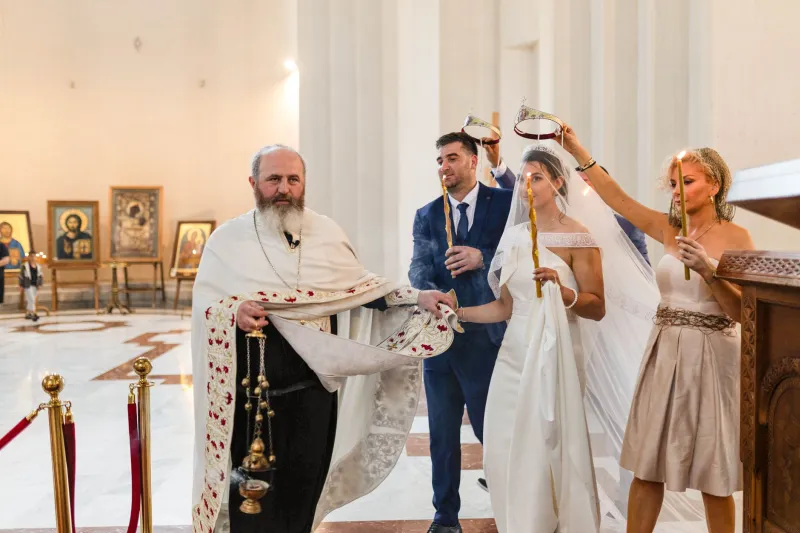
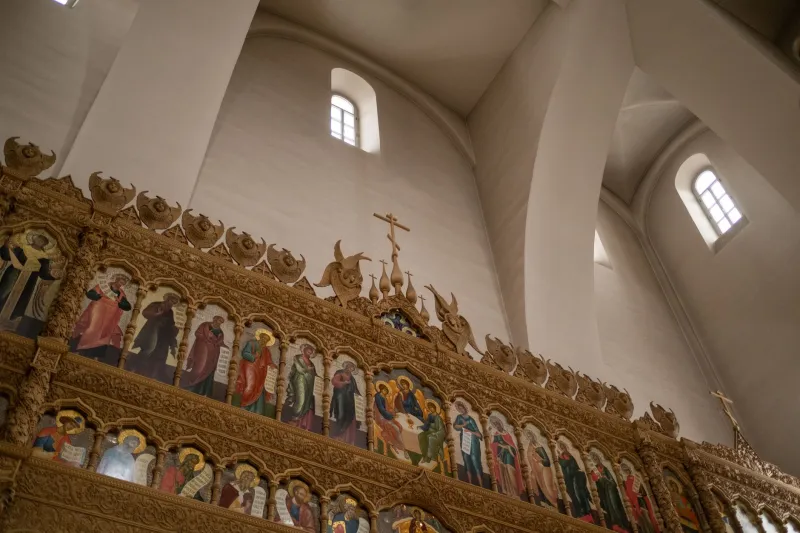
In a small Orthodox parish outside Pittsburgh, a young couple stood motionless beneath two gilded crowns held aloft by their groomsmen. The priest chanted in Church Slavonic, the incense rose in slow spirals toward an icon-lined ceiling, and the assembled guests — roughly half of whom had never attended an Orthodox service in their lives — sat in reverent, slightly bewildered silence. The bride's mother wept. The groom's non-Orthodox college roommate later admitted he had no idea what was happening, but that he had never felt so certain he was witnessing something genuinely sacred.
This scene, or some variation of it, is repeating itself with increasing frequency across the United States. As Polish-American Orthodox communities grow more visible and more intentional about preserving their heritage, the wedding ceremony has emerged as one of the most powerful — and most contested — arenas in which ancient faith confronts modern American life.
The Theology Behind the Crowns
To understand why the Orthodox wedding rite carries such weight, one must first understand what it is not. It is not, in the Orthodox theological framework, primarily a legal declaration or a romantic celebration. It is a coronation.
The crowning ceremony, known in Greek as the Stefanoma and embedded deeply in the Byzantine liturgical tradition that Polish Orthodox Christians inherited, designates the couple as a king and queen of their own domestic church. The crowns — often elaborate, sometimes simple metal bands, occasionally heirloom pieces carried across oceans by immigrant great-grandparents — symbolize both the glory of martyrdom and the honor of a new kingdom founded in mutual self-sacrifice.
Fr. Andrzej Kowalski, a priest serving a Polish Orthodox community in New Jersey, explains the distinction carefully to every couple he prepares for marriage. "In the American cultural imagination, the wedding is the destination," he says. "In the Orthodox understanding, the wedding is the beginning of a vocation. The crowns are not decorative. They are a commission."
This theological depth is precisely what draws many young Polish-American couples back to their ancestral rite, even when they have spent years navigating a largely secular American social world. The ceremony demands something of its participants in a way that a civil ceremony, or even many Protestant wedding services, simply does not.
Polish Particulars Within the Byzantine Frame
While all Eastern Orthodox traditions share the foundational structure of the wedding service — the betrothal rite with the exchange of rings, the procession, the shared cup of wine, the crowning, and the ceremonial walk around the altar table known as the Isaiah's Dance — Polish Orthodox parishes have layered onto this framework a set of cultural practices that are distinctly their own.
Among the most recognizable is the tradition of the oczepiny, the ceremonial removal of the bride's veil or wreath following the reception, symbolizing her transition from maiden to wife. In many Polish Orthodox families in America, this ritual has been carefully preserved even as its original village context has long since dissolved. The songs accompanying it — often sung by older women in the parish who learned them from their own mothers — represent a living chain of cultural transmission that no wedding planning app can replicate.
Food, too, carries enormous symbolic weight. The presentation of bread and salt to the newlyweds by their parents, a tradition with pre-Christian Slavic roots that the Orthodox Church absorbed and sanctified over centuries, remains a fixture at Polish Orthodox receptions from Milwaukee to Brooklyn. The korowaj, an ornately decorated ceremonial bread prepared by women of the parish according to recipes sometimes written in Polish in notebooks held together with rubber bands, appears at receptions as a centerpiece of both nourishment and memory.
Navigating Interfaith Expectations
Perhaps the most delicate challenge facing Polish-American Orthodox couples today is the interfaith wedding — or more precisely, the wedding in which one partner comes from a Roman Catholic, Protestant, or entirely secular background. According to pastoral estimates from several Polish Orthodox parishes along the Eastern Seaboard, a significant and growing proportion of marriages now involve at least one partner who was not raised in the Orthodox tradition.
The Orthodox Church's approach to such unions is nuanced and, to outsiders, sometimes confusing. An Orthodox Christian may marry a baptized non-Orthodox Christian with the blessing of the bishop, but the ceremony must take place within the Orthodox rite. This means that the non-Orthodox partner's family may be encountering Church Slavonic chant, icon veneration, and a two-hour standing liturgy for the first time on what they had imagined would be a fairly conventional Saturday afternoon.
Marta and Daniel Wierzbicki, married three years ago in a Polish Orthodox parish in Connecticut, recall the preparation process with a mixture of humor and genuine gratitude. Daniel's family, Roman Catholic for generations, arrived expecting something resembling the Nuptial Mass they knew. What they found was at once more ancient and more unfamiliar. "My mother kept asking when they would sit down," Daniel recalls. "But by the end, she told me she felt like she had actually been present for something. She said most Catholic weddings she had been to recently felt like performances. This felt like a prayer."
Fr. Kowalski and his colleagues across Polish Orthodox parishes have responded to this interfaith reality by developing pre-marital preparation programs that devote significant attention to explaining the rite to non-Orthodox family members before the wedding day. Printed guides, parish hospitality teams, and in some cases brief explanatory remarks during the service itself have all been employed to ensure that the ceremony's meaning is accessible without being diluted.
The Reception as Continuation
For those unfamiliar with Polish Orthodox wedding culture, the reception can be a second education entirely. The formality of the liturgy gives way — sometimes abruptly — to an exuberance that reflects the Eastern European conviction that joy, too, is a form of worship.
Polka bands and traditional Polish folk music still make appearances at receptions hosted by older, more established parish communities. Toasts are elaborate, multilingual, and occasionally interminable in the best possible sense. The oczepiny, if observed, typically occurs at midnight and involves the entire assembled company in a circle of song. Children fall asleep in folding chairs. Grandmothers dance.
Younger Polish-American couples are increasingly finding ways to honor these traditions while accommodating the expectations of a broader American guest list. A carefully chosen playlist that moves between Chopin and contemporary music, a bilingual toast that explains the significance of the bread-and-salt ceremony, a wedding website that offers a theological primer on the crowning rite — these are the small acts of cultural translation through which a heritage survives its transplantation.
Why It Matters
The Polish Orthodox wedding, in its fullest expression, is an act of resistance as much as celebration. It resists the commodification of matrimony that has made the American wedding industry a multi-billion-dollar enterprise built largely on aesthetic preference. It resists the reduction of marriage to a legal arrangement between two consenting individuals. And it resists the gradual erosion of a specifically Polish Orthodox identity that immigration, assimilation, and intermarriage have placed under sustained pressure for over a century.
For the couple standing beneath those gilded crowns in Pittsburgh, or in any of the dozens of Polish Orthodox parishes scattered across the American landscape, the ceremony is a declaration: that they intend to build their household on a foundation older than the republic they inhabit, and that the faith carried by their ancestors across an ocean is worthy not merely of preservation, but of transmission to the children who will one day stand in the same nave and receive the same crowns.
In the Orthodox understanding, that is not sentiment. That is theology. And it is, for a growing number of Polish-American couples, the most important thing they will ever do on a Saturday afternoon.