Empty Altars: The Deepening Vocational Crisis Inside Polish Orthodox Parishes Across America
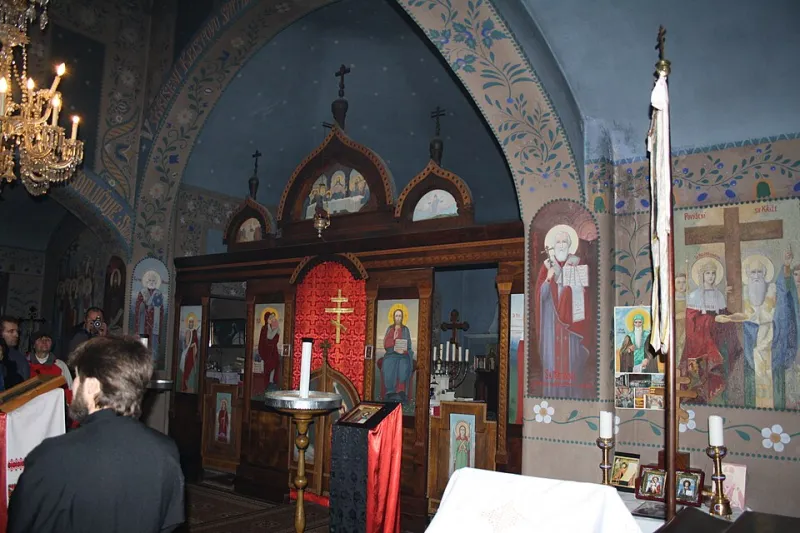
Photo: Frettie, CC BY 3.0, via Wikimedia Commons
On a Sunday morning in a mid-sized Polish Orthodox parish in northeastern Pennsylvania, the congregation fills the nave with incense-laced prayer and the sonorous tones of a centuries-old liturgy. The priest at the altar is seventy-one years old. His assistant deacon retired last spring. The parish has been searching for a younger clergyman for the better part of three years. They have not found one.
This scene, replicated across dozens of Polish Orthodox communities from New England to the Pacific Northwest, is no longer an anomaly. It has become a defining institutional challenge — one that threatens not merely the administrative continuity of individual parishes, but the liturgical and theological vitality of an entire tradition transplanted to American soil.
A Shortage With Deep Roots
The vocational crisis in Polish Orthodox Christianity in America did not emerge overnight. Clergy who have served these communities for decades point to a confluence of pressures that have been building quietly since at least the 1980s, when the first generation of post-war immigrants began to age out of active parish life.
"We used to have young men who grew up entirely inside the parish," said one seminary recruiter who has spent nearly two decades working with dioceses along the Eastern Seaboard. "The faith was their whole social world. Today, even devout families are sending their children to secular universities, into professional careers, into a culture that has very little category for a man who wants to dedicate his life to a parish in Scranton."
The economic dimension of this crisis cannot be overstated. Unlike Roman Catholic priests, Orthodox clergy in the Eastern tradition are ordinarily permitted — and in most cases expected — to marry before ordination to the diaconate. This is, theologically, a gift. Practically, however, it means that a young man pursuing priesthood must simultaneously support a family on a parish salary that, in many Polish Orthodox communities, hovers uncomfortably near the poverty line. In an era defined by student debt, inflated housing costs, and the relentless pressure of American consumer culture, the financial arithmetic of parish ministry is punishing.
"I have spoken with young men who are genuinely moved by the calling," said the rector of a Polish Orthodox seminary in the mid-Atlantic region, speaking on condition of institutional anonymity. "And then they look at what their priest earns, they look at what their classmates will earn in engineering or finance, and the conversation changes. It is not that they lack faith. It is that they lack a structure that makes the sacrifice sustainable."
The Cultural Dislocation of American Orthodox Manhood
Beyond economics, there is a subtler erosion underway — one that touches the very formation of Orthodox identity among American-born men of Polish heritage. The parish, for previous generations, was the gravitational center of social and spiritual life. Young men served as altar boys, absorbed the liturgical rhythms of the Church year, and encountered the priesthood as something natural, proximate, and admirable.
That formation pipeline has been disrupted by assimilation. Polish Orthodox families who settled in industrial cities across Pennsylvania, Ohio, and New York maintained tight-knit ethnic enclaves well into the mid-twentieth century. Their grandchildren attend suburban public schools, participate in mainstream American youth culture, and frequently have limited fluency in either Polish or Church Slavonic. The priesthood, when it appears in their consciousness at all, can feel like an artifact of a world their grandparents inhabited — meaningful, perhaps, but not obviously theirs to claim.
Parish leaders are aware of this rupture. Several have instituted intentional formation programs — summer retreats, mentorship relationships with active clergy, liturgical internships — designed to reintroduce young men to the interior life of the Church before they leave for college. The results have been mixed but not without hope.
"We had a young man, twenty-three years old, third-generation Polish-American," recalled one parish council chairman in New Jersey. "He had almost no connection to the Church when he came to us. Within two years of serious formation, he was seriously discerning a vocation. That tells me the hunger is there. We simply have not been feeding it intentionally enough."
Structural Responses to a Spiritual Problem
Some dioceses have begun experimenting with structural adaptations to the shortage. Tent-making ministry — in which priests hold secular employment alongside their parish responsibilities — has gained quiet traction in communities too small to offer a living wage. Shared clergy arrangements, in which a single priest serves two or three parishes on a rotating schedule, have become common in rural areas.
These adaptations carry their own costs. A priest stretched across multiple congregations cannot offer the pastoral depth that a community in crisis — a grieving family, a young person wavering in faith, a marriage under strain — genuinely requires. The liturgy can be served. The sacraments can be administered. But the slow, invisible work of spiritual accompaniment suffers under the weight of institutional triage.
Seminary leadership, for its part, is investing in recruitment efforts that would have seemed unnecessary a generation ago. Vocations weekends, online outreach to young Orthodox men, and partnerships with parish youth ministries are all part of a deliberate strategy to widen the pool of candidates. Scholarship programs aimed at reducing the financial burden of seminary formation have been expanded in several dioceses.
Yet recruitment alone cannot resolve a crisis rooted in cultural formation. The Polish Orthodox tradition in America needs young men who have been shaped — over years, within families and parishes — into the kind of persons for whom priestly life is imaginable. That formation cannot be manufactured by a weekend retreat or a targeted social media campaign.
What Is at Stake
The vocational crisis is, at its core, a theological crisis. The Orthodox Church does not regard the priesthood as a profession to be staffed but as a sacred vocation to be received. When parishes go without resident clergy, when the sacramental life of a community grows thin, when the Liturgy is celebrated only twice a month by a priest driving in from two counties away, something essential is diminished — not merely administratively, but spiritually.
Polish Orthodox communities in America have survived immigration, poverty, political persecution, and the slow pressures of assimilation. They have carried an ancient faith across an ocean and planted it in unfamiliar soil. The question now before them is whether they can cultivate, within that same soil, the next generation of men called to stand at the altar.
The answer, every honest observer agrees, will not come from seminaries alone. It will come from families who speak openly about the priesthood as a worthy life. It will come from parishes that treat the formation of young men as a communal responsibility rather than a private spiritual matter. And it will come, ultimately, from the mysterious movement of grace — which, as the tradition insists, has never been fully subject to human planning.