Shelves of the Shepherd: The Theological Reading Life of Polish Orthodox Priests in America Today
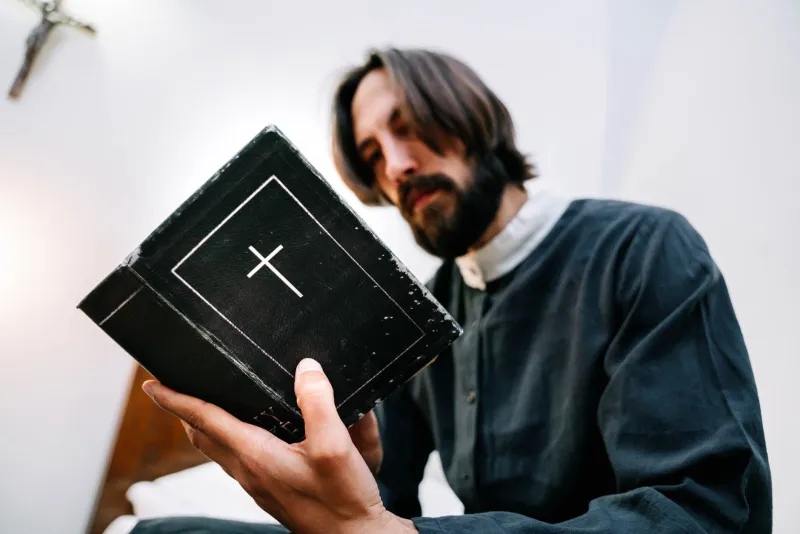
There is an old saying among seminary professors that a priest who stops reading stops growing. In the context of Polish-American Orthodox Christianity, this adage carries particular weight. The clergy who serve these communities occupy a singular position: they are inheritors of an Eastern Christian theological tradition centuries deep, while simultaneously functioning as pastors in a country where Orthodox Christianity remains, for most Americans, largely unfamiliar. The books on their shelves are not incidental. They are, in many ways, the architecture of their ministry.
Cerkiew America reached out to several active priests serving Polish-heritage Orthodox parishes across the United States — from the industrial parishes of Pennsylvania to the newer communities of the Pacific Northwest — to ask a simple but illuminating question: What are you reading, and why does it matter?
The Fathers First
Without exception, every priest interviewed returned, eventually, to the same foundation: the writings of the Church Fathers. Father Aleksander Wojciechowski, who serves a parish in western Pennsylvania with roots stretching back to the early twentieth-century immigration wave, described the Fathers not as historical curiosities but as living conversation partners.
"I keep the Philokalia on my desk, not my shelf," he said. "There is a difference. The shelf is for reference. The desk is for formation. When I am preparing a homily or counseling a parishioner through grief, I return to Maximus the Confessor or John Climacus not because I am required to, but because they have already articulated what I am trying to say — only far better than I ever could."
This reverence for patristic literature is not mere traditionalism for its own sake. Priests across the country described the Fathers as providing a theological grammar that helps them resist what several called the "therapeutic drift" of contemporary American religious culture — the tendency to reduce spiritual counsel to psychological affirmation rather than genuine moral and theological engagement.
Between East and West: Navigating the American Context
Yet the reading life of a Polish Orthodox priest in America does not stop at Byzantium. The pastoral demands of American parish life require engagement with a broader range of literature. Father Tomasz Bielski, who ministers to a mixed congregation in the Chicago metropolitan area, described his approach as deliberately bilingual — not linguistically, but intellectually.
"I read Alexander Schmemann and Georges Florovsky alongside C.S. Lewis and even some contemporary Protestant writers on congregational health," he explained. "Not because I am confused about what I believe — I am not — but because my parishioners live in an American world. They are reading these authors. They are encountering these ideas at work, at school, with their neighbors. I need to know the landscape."
Father Bielski's mention of Alexander Schmemann was echoed in nearly every conversation Cerkiew America conducted for this article. Schmemann's For the Life of the World, first published in English in 1963 and still widely assigned in Orthodox seminaries, was described repeatedly as a kind of bridge text — one that articulates Orthodox sacramental theology in language accessible to American readers without diluting its substance. Several priests noted that they recommend it regularly to inquirers and to lifelong parishioners alike.
Georges Florovsky's collected works, particularly his essays on the nature of the Church and the meaning of tradition, were likewise cited as indispensable. "Florovsky teaches you to think Orthodox," said Father Wojciechowski. "Not just to believe Orthodox, but to think that way. That is a different discipline entirely."
The Polish Dimension
For priests serving specifically Polish-heritage communities, the reading list carries an additional layer. The theological and historical literature pertaining to Polish Orthodoxy — particularly the experience of Orthodox Christians in the borderland regions of historic Poland-Lithuania — forms a distinct area of study that many described as personally urgent.
"There is an entire tradition of Orthodox witness within Polish-speaking lands that most Americans, including most Polish-Americans, know almost nothing about," said Father Marek Kowalski, who leads a parish in New Jersey and holds a graduate degree in Eastern Christian studies. "I read everything I can find on the history of the Orthodox Church in the Kresy, on the Chełm eparchy, on the martyrs of Podlasie. This is not just academic interest. It is pastoral. My parishioners need to know that their faith is not a foreign import. It has deep roots in their own ancestral soil."
Father Kowalski recommended several titles to Cerkiew America that he regularly places in his parish library, including scholarly works on the Uniate and Orthodox history of eastern Poland, as well as Polish-language theological journals that, he noted with some frustration, remain largely untranslated into English.
Recommending to the Flock
The question of what priests recommend to their congregations proved equally illuminating. Most described a tiered approach: accessible introductory texts for inquirers and newer members, and more substantive theological reading for those who wish to go deeper.
Kallistos Ware's The Orthodox Church and The Orthodox Way appeared on virtually every recommended list, praised for their clarity and their ability to explain Eastern Christianity to readers formed in Western religious assumptions. Frederica Mathewes-Green's Facing East was mentioned as particularly useful for American converts navigating their first years in the faith. For parishioners ready for more demanding reading, priests pointed toward the writings of Elder Sophrony of Essex, the correspondence of Saint Paisios of the Holy Mountain, and the sermons of Saint John of Kronstadt.
Several priests also noted the growing importance of podcasts, recorded lectures, and digital resources — not as replacements for serious reading, but as supplements that reach parishioners who might not otherwise engage with theological content. Father Bielski described curating a short list of recommended audio resources for his parish bulletin each month. "People are busy. I understand that. But the faith is not shallow, and I will not pretend it is. I try to meet people where they are and then invite them to go further."
Formation as a Lifelong Discipline
What emerges from these conversations is a portrait of clergy who understand their own intellectual formation as inseparable from their pastoral vocation. The priest's library is not a professional credential, displayed to signal competence and then largely ignored. It is a living tool, consulted in the preparation of sermons, in the guidance of souls, and in the ongoing effort to make ancient truth legible to contemporary American life.
For Polish-American Orthodox communities specifically, this reading life carries a preservationist dimension as well. The literature these priests study and recommend helps transmit not only Orthodox theology in the abstract, but a particular cultural and historical memory — one rooted in the complex, often painful experience of Orthodox Christians in Polish lands, and one that finds new expression on American soil.
In a religious landscape crowded with competing voices and rapid cultural change, the quiet discipline of the priest's reading hour may be among the most consequential acts of pastoral faithfulness. What these shepherds choose to place on their desks — not merely their shelves — will shape the faith of their communities for generations to come.