Hidden in Plain Faith: The Polish Orthodox Clergy Who Defied Communist Book Burners — and the American Scholars Recovering Their Legacy
In the winter of 1952, a priest in eastern Poland received a directive that would have been unremarkable in its bureaucratic plainness had its intent not been so nakedly destructive. State cultural officers were to inspect parish libraries. Theological works deemed "ideologically incompatible" with the new order were to be surrendered. What happened next — what that priest chose to do in the hours before the inspectors arrived — would not be recorded in any official document. It would be remembered only in the whispered accounts passed down through a family now living in New Jersey.
"My grandfather wrapped the books in oilcloth," says Marek Sobczyk, a parishioner at a Polish Orthodox parish outside Trenton. "He buried them beneath the floorboards of the vestry. Some he gave to farmers he trusted, hidden inside grain sacks. He told no one else. Not even my grandmother."
Sobczyk's grandfather, Father Aleksander Sobczyk, was one of dozens — perhaps hundreds — of Polish Orthodox clergymen who engaged in quiet, systematic resistance against the Communist regime's campaign to dismantle religious intellectual life. Their stories have been largely absent from mainstream accounts of Cold War-era religious persecution, overshadowed by more widely documented Catholic and Protestant narratives. Yet the scale and ingenuity of their efforts, now gradually coming to light through oral histories and archival research, constitute one of the most remarkable chapters in the history of Orthodox Christianity in Central Europe.
A Systematic Assault on Sacred Knowledge
To appreciate the significance of what these priests preserved, it is necessary to understand what the Communist authorities sought to destroy. Polish Orthodox Christianity carries within it a theological and liturgical heritage distinct from both Roman Catholicism and Russian Orthodoxy — a tradition shaped by centuries of Byzantine influence, Polish language and culture, and the particular spiritual temperament of communities living at the crossroads of empires. Its libraries were not simply collections of books. They were repositories of identity.
The postwar Soviet-backed government moved against religious institutions with calculated patience. Outright seizure of churches provoked resistance; the slower strangulation of religious education, publication, and intellectual life was less visible and more effective. Seminaries were shuttered or placed under state supervision. Religious publishing was restricted. Parish libraries — often containing manuscripts, illuminated liturgical texts, and theological commentaries accumulated over generations — became targets of inspection and confiscation.
"The goal was not merely to silence the Church in the present," explains Dr. Anna Wiśniewska, a historian of Eastern European religion at a university in Chicago who has spent the past decade documenting these acts of preservation. "It was to sever the Church from its own past. A community without access to its theological heritage is far more vulnerable to ideological manipulation. The priests who hid these books understood that intuitively, even if they would never have framed it in those terms."
The Mechanics of Concealment
The methods employed by these clergymen were as varied as their circumstances. Some, like Father Sobczyk, relied on physical concealment — beneath floors, behind false walls, inside agricultural outbuildings. Others dispersed collections among trusted laypeople, scattering volumes across a network of households where a single theological treatise might sit for decades behind a row of Soviet-approved novels.
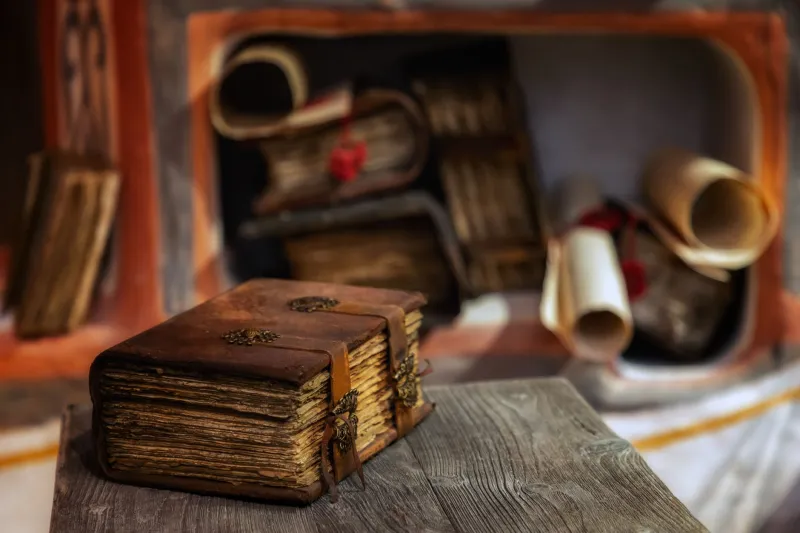
Father Józef Krawczyk, whose story has been partially reconstructed through letters preserved by his daughter, now residing in Pennsylvania, took a different approach. A meticulous man with a background in bookbinding, he systematically rebound theological texts with secular covers — parish account ledgers, agricultural almanacs, even a collection of folk songs. Inspectors who opened these volumes saw what appeared to be mundane administrative records. The actual contents, written in Church Slavonic and Polish, remained hidden in plain sight on the open shelves of his parish office.
"He kept a careful coded list of which cover concealed which text," says his daughter, Halina Kruk, now in her seventies. "That list was sewn into the lining of his winter coat. He wore that coat for thirty years."
Not all who attempted such preservation escaped consequence. Several priests were arrested on charges that, while rarely specifying the protection of religious literature, were transparently connected to their resistance activities. Interrogations, forced labor assignments, and in some cases longer imprisonment followed. The knowledge of these risks did not deter their colleagues. If anything, the arrests appear to have intensified the determination of those who remained free.
Survival, Emigration, and the Journey to America
The collections that survived the Communist era did so through a combination of clerical ingenuity, lay loyalty, and — it must be said — a measure of providential fortune. When political conditions shifted in the late 1980s and early 1990s, some of these hidden libraries were gradually reassembled. Others had been partially lost to moisture, rodents, or the deaths of the individuals who had concealed them without leaving adequate records of their locations.
A significant portion of what survived made its way, through emigration, to the United States. Polish Orthodox communities in cities including Chicago, New York, and Philadelphia became inadvertent custodians of materials that had no formal institutional home. Volumes arrived in suitcases, wrapped in clothing, tucked between personal documents. They were placed on the shelves of parish libraries, stored in rectory basements, or kept in private homes where their significance was understood but their broader historical importance was not yet fully appreciated.
"For years, these things just sat," acknowledges Father Tomasz Bielecki, a parish priest in the Chicago metropolitan area who has been coordinating a local effort to identify and catalog such materials. "People knew they were important. They weren't sure what to do with them. There was no infrastructure to receive them."
The Digitization Movement
That infrastructure is now, slowly, being built. A coalition of Polish-American Orthodox scholars, archivists, and parish communities has begun a coordinated effort to identify, photograph, and digitize surviving materials. The project, still in its early stages, has already surfaced items of considerable scholarly significance — including a partial manuscript commentary on the Divine Liturgy that predates any previously known Polish-language Orthodox theological text of its kind, and a collection of handwritten sermons by a bishop whose published works were entirely suppressed during the Communist period.
Dr. Wiśniewska describes the digitization work as urgent in ways that extend beyond academic interest. "These texts represent theological voices that were deliberately silenced. Restoring them to the scholarly record is an act of historical justice. But it is also, for the communities descended from the people who preserved them, an act of spiritual restoration."
The work is complicated by the condition of many surviving materials, the absence of provenance documentation, and the simple reality that the community of scholars with the necessary linguistic and theological preparation to assess these texts is small. Efforts are underway to establish partnerships with university libraries and Orthodox theological institutions that could provide both technical resources and scholarly expertise.
Memory as Resistance
For families like the Sobczyks and the Kruks, the digitization project carries a meaning that transcends scholarship. It is, in a very direct sense, the completion of something their grandparents and parents began under conditions of fear and constraint.
"My grandfather never spoke about what he did in terms of heroism," Marek Sobczyk reflects. "He would have found that framing uncomfortable. He simply believed that a priest's obligation to his tradition did not expire because the state found that tradition inconvenient. He kept the books because the books were his responsibility."
That sense of custodial obligation — of faith as something entrusted rather than merely practiced — runs through virtually every account of this resistance. The priests who concealed these libraries were not, by and large, political actors in any conventional sense. They were men who understood that the destruction of a community's theological memory was a form of violence against its soul, and who acted accordingly.
Their libraries survived. The work of ensuring that survival means something — that these texts are read, studied, and allowed to speak — now falls to a new generation, many of them Americans, all of them heirs to a courage they are only beginning to fully comprehend.