Sacred Bonds on Paper: The Case for Formalizing Godparent Commitments in Polish Orthodox Parishes
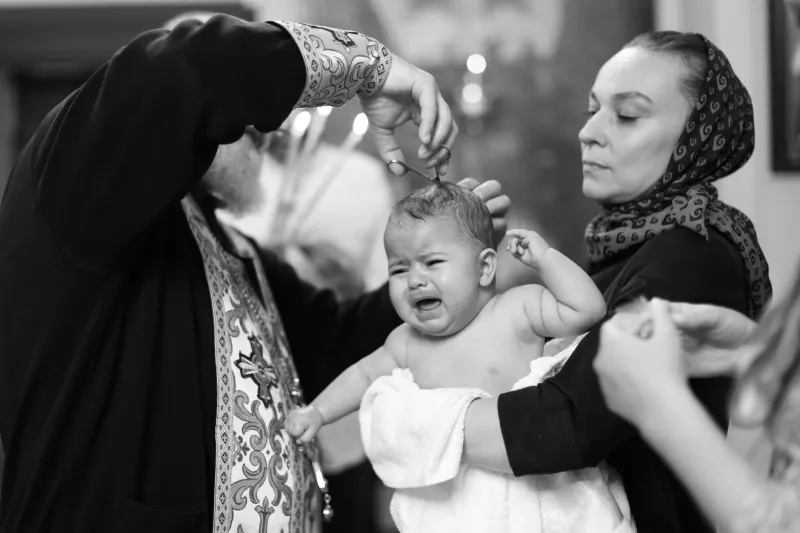
In the Orthodox tradition, the godparent — the kum or kuma in Polish parlance — is not a ceremonial figure. The Church has always understood the sponsor as a second spiritual parent, bound by conscience and by God to guide, protect, and nurture the faith of the child entrusted to their care. Yet in twenty-first-century America, that ancient understanding is colliding with modern realities: families relocate, friendships fracture, and the unspoken assumptions of a village-based religious culture do not always survive the pressures of suburban American life.
In response, a small but growing number of Polish Orthodox parishes across the United States have begun experimenting with written godparent agreements — formal documents that articulate, in plain language, what a sponsor is expected to do in the years following baptism. The practice remains controversial, and it raises a question that strikes at the heart of Orthodox ecclesiology: can a sacred covenant be strengthened by a legal instrument, or does the very act of writing it down diminish what it means?
The Problem That Prompted the Paper
The impetus for these agreements rarely comes from theology. It comes from conflict.
Pastors who have served Polish Orthodox communities for decades describe a recurring and painful pattern. A child is baptized with great ceremony. The godparents attend the reception, accept the honor, and depart. Years pass. The child enters adolescence without ever having received a word of catechetical encouragement from their sponsor. When a family crisis arrives — a father's illness, a mother's job loss, the child's own spiritual wandering — the godparent is nowhere to be found. In some cases, they have converted to another denomination. In others, they have simply drifted away, their Orthodox identity having never been particularly robust to begin with.
More acute disputes also arise. Questions about who bears responsibility for a child's religious education when parents divorce. Questions about whether a godparent has any standing to intervene when a child is being raised outside the Church. Questions, in the most tragic circumstances, about burial arrangements when a young person dies without a will and family relationships have broken down.
"I have buried two young people in the last ten years where the question of who was responsible for the funeral became a source of real anguish," said one parish priest serving a mid-sized Polish Orthodox congregation in the Mid-Atlantic region, who asked not to be identified by name. "The godparents in both cases had no idea what was expected of them. Nobody had ever told them."
What the Agreements Actually Say
The written sponsorship agreements currently in use across several parishes vary in length and tone, but most share a common structure. They begin with a theological preamble — a brief articulation of what the Orthodox Church teaches about the godparent's role — before moving into specific, practical commitments.
These typically include a pledge to pray for the godchild by name each day; a commitment to maintain regular contact, particularly around feast days and name days; an agreement to provide financial assistance during family emergencies when the sponsor is able to do so; and an acknowledgment that the godparent will support the child's participation in parish life, including Sunday school, youth programs, and eventually preparation for marriage within the Church.
Some agreements go further. At least two parishes have included clauses addressing what happens if the godparent relocates, converts to another faith, or becomes incapacitated. One document reviewed by Cerkiew America includes a provision asking the godparent to designate a successor — a trusted Orthodox Christian who could, with the pastor's blessing, assume a mentoring role if the original sponsor becomes unable to fulfill their commitment.
The Theological Objection
Not everyone is persuaded that this approach is wise, or even appropriate.
Several theologians consulted for this article expressed discomfort with the contractual framing. The concern is not that clarity is bad — it is that the logic of contract is fundamentally different from the logic of covenant. A contract is an instrument of mutual obligation enforced by external authority. A covenant, in the biblical and patristic sense, is a relationship grounded in love, sustained by grace, and answerable ultimately to God rather than to any human institution.
"When we begin to think of godparenthood as a legal relationship, we inevitably begin to think of its obligations as burdens rather than gifts," argued one Orthodox theologian based in the Northeast. "The sponsor who prays for their godchild because they signed a document is not the same as the sponsor who prays because they love that child and feel the weight of their promise before the altar."
This objection deserves to be taken seriously. The history of Western Christianity offers cautionary examples of what happens when the Church becomes excessively legalistic in its approach to sacramental life. Polish Orthodox Christianity, rooted in the Eastern tradition, has historically resisted that tendency.
A Middle Way Worth Considering
And yet the parishes that have adopted these agreements report something unexpected: the documents are functioning less as legal instruments and more as pastoral tools. Priests describe using the signing ceremony — typically conducted during pre-baptismal preparation — as an opportunity for extended conversation about what godparenthood actually means. The written text gives the discussion a focus and a gravity it might otherwise lack.
"Nobody reads the document and thinks they are signing a lease," said one pastor whose parish has used a sponsorship agreement for nearly four years. "They read it and they realize, perhaps for the first time, that the Church takes this seriously. That changes the conversation entirely."
This framing suggests a possible resolution to the theological tension. If the document is understood not as a contract but as a catechetical instrument — a tool for forming godparents rather than for binding them — then the objection loses much of its force. The paper is not the covenant. The paper points toward the covenant and helps the sponsor understand what they are entering.
A Question of Formation, Not Legislation
Ultimately, the debate over written godparent agreements reflects a deeper challenge facing Polish Orthodox communities in America: the erosion of the informal transmission networks through which religious obligations were once communicated. In the villages of eastern Poland or the Carpathian highlands from which many of these families descend, the expectations of a godparent were absorbed through observation, through community pressure, and through a dense web of shared memory. In suburban New Jersey or western Pennsylvania, those networks are thinner.
The written agreement is, at its core, an attempt to compensate for that thinning — to articulate explicitly what a more intact community would have conveyed implicitly. Whether that compensation is adequate, or whether it addresses the symptom while leaving the underlying illness untouched, is a question that Polish Orthodox parishes across America will be wrestling with for years to come.
What seems clear is that doing nothing is not a neutral choice. The godchildren who grow up without sponsors who understand their role are not being protected by the tradition's silence. They are being failed by it.