Stillness as Resistance: How Polish-American Youth Are Turning to Orthodox Contemplative Prayer in an Age of Noise
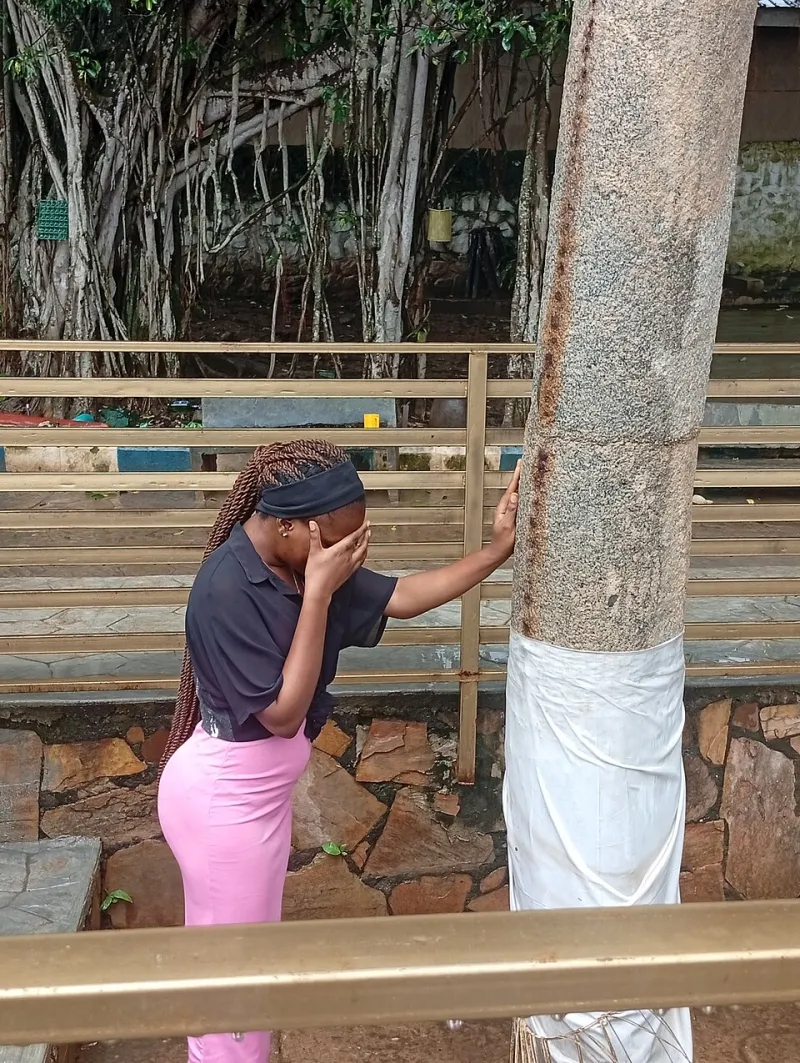
Photo: Modede123, CC0, via Wikimedia Commons
In a small apartment in Chicago's Ukrainian Village neighborhood, a twenty-six-year-old software engineer named Marek keeps a prayer rope on his desk beside his keyboard. He is not a monk. He holds no theological degree. Yet each morning, before opening a single application, he repeats the same words his spiritual father taught him during a weekend retreat in rural Pennsylvania: Lord Jesus Christ, Son of God, have mercy on me, a sinner. He does this three hundred times. He has done so for two years.
"People ask me if I meditate," Marek says. "I tell them I pray. They look confused, as though prayer and stillness cannot belong together. That confusion is exactly what I had to unlearn."
Marek is part of a phenomenon that Polish Orthodox clergy and lay leaders across the United States are beginning to notice with cautious but genuine hope: a growing number of young Polish-Americans, many of whom drifted through secular universities and the diffuse spiritual landscape of contemporary American life, are returning — or arriving for the first time — to Orthodox Christianity not through ethnic sentiment but through its contemplative tradition. They are discovering hesychasm.
What Hesychasm Actually Is — and Why It Matters Now
The word derives from the Greek hesychia, meaning stillness or quietude. Hesychasm is not a technique borrowed from Eastern wellness culture. It is a fully developed theological tradition within Orthodox Christianity, articulated most rigorously by Saint Gregory Palamas in the fourteenth century and practiced by monastics across the Byzantine world for centuries before that. At its center is the conviction that human beings, through disciplined prayer, fasting, and the guidance of a spiritual father, can achieve genuine union with the uncreated energies of God — not merely a metaphor for closeness, but a real, transformative encounter with divine light.
For Polish Orthodox Christians, this tradition carries particular weight. The hesychast influence traveled through the monasteries of Mount Athos into the Slavic Orthodox world, shaping the spirituality of saints venerated across Poland's eastern borderlands — the Kresy — long before Communist authorities dismantled the ecclesiastical infrastructure of those regions. To recover hesychasm is, for many young Polish-Americans, to recover something their grandparents carried across the Atlantic without always having the vocabulary to name it.
The Digital Corridor to Ancient Practice
The path to contemplative Orthodoxy for many young Americans runs, paradoxically, through the internet. Podcasts devoted to patristic theology, YouTube channels featuring Orthodox monks discussing the Philokalia, and private Discord servers where young inquirers share reading lists and retreat schedules have created an informal but remarkably effective catechetical infrastructure.
Fr. Andrzej Kowalski, a priest serving a parish in New Jersey whose congregation has welcomed a notable influx of younger parishioners over the past three years, describes the pattern he sees repeatedly. "They come having already read Theophan the Recluse or Sophrony Sakharov. They have listened to recordings of Athonite chant. They are not curious tourists. They are hungry people who have done significant preparation before they ever walk through the parish doors."
This digital preparation, while no substitute for sacramental life and personal mentorship, has lowered the barrier to initial engagement significantly. Young people who grew up in households where Polish Orthodox identity was present but not deeply catechized are finding their way back through intellectual rather than purely sentimental channels — and the contemplative tradition, with its emphasis on direct experience of God rather than mere institutional belonging, speaks directly to a generation suspicious of organized religion yet spiritually restless.
Monastic Retreats as Turning Points
For many, the decisive moment comes not online but in person — specifically, during a visit to one of the Orthodox monasteries within reach of major American population centers. Several such communities, located in Pennsylvania, New York, and the Pacific Northwest, have developed informal retreat programs that welcome inquirers and young faithful for weekends of prayer, silence, and conversation with monastic guides.
Katarzyna, a thirty-one-year-old from the Philadelphia suburbs whose family has attended a Polish Orthodox parish for three generations, describes her first monastery visit as disorienting in the best possible sense. "I had spent years trying yoga, journaling, therapy — all valuable in their own way. But I had never experienced silence that felt inhabited rather than empty. The monks were not performing peace. They had cultivated it, over years, through a practice. That was the first time I understood that what I was looking for had a name and a method."
The Jesus Prayer, she explains, became her entry point into a structured interior life that no secular mindfulness application had been able to provide — not because it was more relaxing, but because it was more demanding. "Mindfulness asks you to observe your thoughts without judgment. The Jesus Prayer asks you to surrender them entirely to God. That is a fundamentally different anthropology."
The Mentorship Question
Critical to the sustainability of this renewal is the availability of qualified spiritual guides. Hesychasm has always insisted on the necessity of a starets — an experienced spiritual father capable of discerning the movements of the soul and guarding the practitioner against spiritual delusion, what Orthodox tradition calls prelest. In America, such guides are rare, and the demand among young seekers is increasingly outpacing the supply.
Fr. Kowalski is direct about the challenge. "We can introduce young people to the Jesus Prayer. We can recommend the Philokalia. But the tradition is clear: interior prayer at depth requires personal guidance. Without that, there is real risk of spiritual harm. The Church must take seriously the formation of priests and monastics who can serve in this capacity."
Some Polish Orthodox parishes are responding by establishing formal spiritual direction programs, connecting young parishioners with monastic communities for periodic guidance, and hosting study groups devoted to the patristic texts that underpin contemplative practice. These efforts remain modest relative to the need, but they represent a meaningful institutional acknowledgment that the renewal is real and requires pastoral support.
A Return That Is Also an Arrival
What strikes observers most about this movement is its theological seriousness. These are not young people seeking an aesthetic alternative to secular culture — a more beautiful, more ancient-feeling lifestyle brand. They are, by and large, people who have encountered genuine suffering, genuine emptiness, and who have concluded that the Orthodox tradition's diagnosis of the human condition is more honest, and its remedy more complete, than anything contemporary American spirituality has offered them.
For Polish Orthodox communities in America, the challenge is to receive them well — to offer not merely the externals of a beautiful tradition but the full interior depth that makes those externals meaningful. The hesychast renewal among young Polish-Americans is, at its core, a call to the Church itself: to remember what it carries, to teach what it knows, and to trust that the ancient way of stillness remains, in this loudest of centuries, precisely what a restless generation most needs to find.