The Ancient Faith in a New Medium: How Young Polish-Americans Are Recovering Orthodox Identity Online
Somewhere between a TikTok video about Byzantine chant and a Discord server dedicated to Eastern Christian theology, a twenty-three-year-old from suburban Connecticut is learning for the first time that his family's Orthodox faith is not merely a relic of his grandparents' immigration story. It is a living tradition — and it belongs to him.
This scene, or something very much like it, is playing out with increasing frequency across the United States. A generation of young Polish-Americans, many of whom grew up at some remove from the parish life their ancestors built, are discovering and reclaiming their Orthodox Christian heritage through the very technologies that critics once feared would accelerate religious decline. The result is a complex, sometimes contradictory, but genuinely hopeful movement of retrieval and renewal.
A Heritage Half-Remembered
To understand what is being recovered, one must first understand what was nearly lost. The Polish Orthodox community in America has always occupied an unusual position — distinct from the larger Roman Catholic Polish diaspora, often misunderstood by both secular Americans and fellow Orthodox Christians of other ethnic backgrounds. For much of the twentieth century, Polish Orthodox parishes served as ethnic enclaves, their identity bound tightly to language, neighborhood, and immigrant memory.
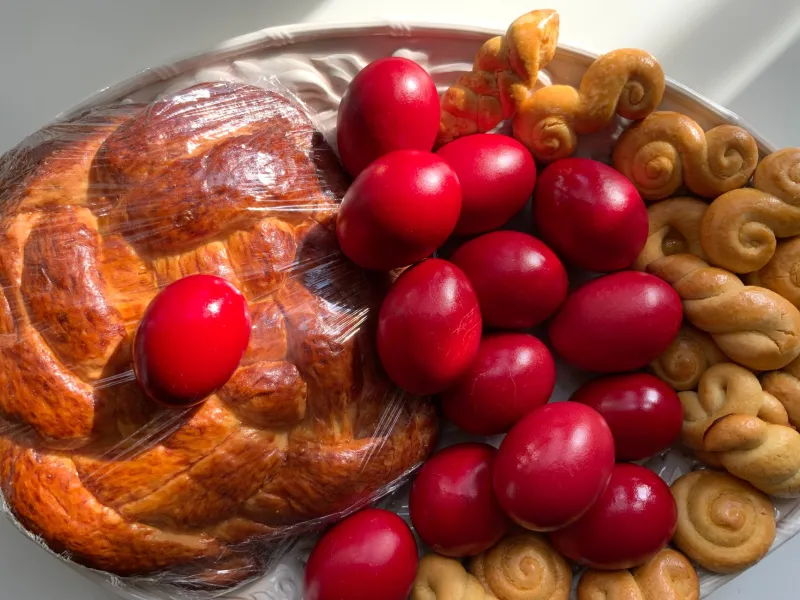
As those neighborhoods changed and the original immigrant generation passed, the transmission of faith grew uncertain. Many families retained cultural markers — the Easter basket, the Christmas Eve supper, a grandmother's icon in the hallway — without the theological framework that gave those customs their meaning. The faith became, for some, a matter of sentiment rather than conviction.
Dr. Tomasz Grabowski, a historian at a Catholic university in the Midwest who has written on Eastern Christian immigration to America, describes this pattern with careful precision. "There is a distinction between inherited religion and inhabited religion," he observes. "Many second and third-generation Polish-Americans inherited the forms of Orthodoxy without fully inhabiting its interior life. What we are seeing now, particularly online, is a generation attempting to move from one to the other."
The Digital Parish
The internet did not create this hunger for religious authenticity, but it has provided remarkable tools for satisfying it. Young Polish-Americans seeking to understand their Orthodox heritage now have access to resources that simply did not exist for previous generations: podcast series on Orthodox theology, YouTube lectures by bishops and theologians, Instagram accounts dedicated to iconography and liturgical arts, and online reading groups working through patristic texts.
Several digital initiatives have emerged with a specifically Polish Orthodox focus. A podcast produced by young parishioners of a New York-area Polish Orthodox parish has attracted listeners well beyond its local congregation, exploring topics ranging from the theology of the Divine Liturgy to the history of Orthodox Christianity in the Podlasie region of Poland. The hosts, both in their late twenties, describe their project as an act of filial piety as much as an evangelizing effort.
"We made it because we had questions and couldn't find the answers anywhere in English," says Piotr, one of the podcast's co-founders, who asked that his surname not be published. "And then we realized other people had the same questions. Young people whose babcias had taken them to church but who had never been told why the priest faces east, or why we venerate icons, or what it means that we fast. The hunger was there. We just needed to feed it."
Social Media as Icon Screen
Beyond podcasts, social media platforms have become unexpected spaces for Orthodox catechesis and community formation. Instagram accounts run by young Polish-American Orthodox Christians share photographs of historic parish interiors, explanations of liturgical seasons, and reflections on the integration of faith and daily life. These accounts consistently attract followers far outside the Polish-American community, suggesting that the appeal of Orthodox tradition extends well beyond ethnic boundaries.
Karolina Dąbrowska, a twenty-six-year-old graphic designer in Philadelphia, began her Instagram account two years ago as a personal journal of her return to the Orthodox faith she had largely set aside during college. What began as a private exercise in accountability became, unexpectedly, a community of several thousand followers.
"I post about fasting, about the feasts, about going to Vespers on a Saturday night instead of going out," she explains. "People respond because they feel something is missing in their lives, and they recognize it when they see it. Orthodoxy is visually beautiful and theologically serious. That combination is rare, and people notice."
She is careful, however, to distinguish between the aesthetic appeal of Orthodoxy and its demanding interior life. "I try to be honest that it is hard. The fasts are long. The services are long. It requires real commitment. I don't want to make it look easy on social media when it isn't."
The Tension of Authenticity
This concern — the gap between digital presentation and lived practice — is one that thoughtful observers within the Polish Orthodox community take seriously. The same platforms that make tradition accessible can also flatten it, reducing centuries of theological depth to a series of aesthetically pleasing images or intellectually stimulating content consumed without commitment.
Father Grzegorz Lewandowski, a parish priest in the Chicago metropolitan area who works closely with young adults, welcomes the digital engagement while maintaining clear-eyed realism about its limits. "The internet can bring someone to the door of the church," he says. "But it cannot bring them through it. At some point, the faith must be embodied — in the liturgy, in the community, in the disciplines of prayer and fasting. A podcast cannot replace the Eucharist."
He has observed, however, that digital engagement frequently does lead to physical presence. Young people who discovered Polish Orthodox content online have found their way to his parish for the first time, drawn by curiosity that the internet kindled but could not satisfy. Several have entered into formal catechesis.
Assimilation and the Question of Belonging
For many young Polish-Americans navigating this rediscovery, the question of identity is inseparable from the question of faith. To claim an Orthodox Christian heritage in contemporary America is to accept a degree of counter-cultural distinctiveness — in practice, in belief, and in one's relationship to the dominant secular culture.
This is not uniformly comfortable. Young professionals describe the social friction of explaining Lenten fasting to colleagues, or declining certain entertainments during the pre-Pascha period. Some report a sense of belonging to two worlds fully — neither the secular mainstream nor the older immigrant parish culture of their grandparents — and finding that the digital community provides a necessary bridge.
Yet the most serious among them describe this tension not as a burden but as a clarifying gift. "Orthodoxy asks you to be different," reflects Marta Kowalska, a twenty-nine-year-old attorney in Washington, D.C., who returned to the faith of her Polish-American family in her mid-twenties. "And when you accept that, you find out who you actually are. The tradition doesn't accommodate itself to you. You accommodate yourself to it. That is where the identity comes from."
A Tradition with a Future
The movement of young Polish-Americans toward their Orthodox heritage — aided by digital tools but anchored in ancient practice — does not resolve the tensions between preservation and adaptation, between community and individualism, between the inherited and the chosen. These tensions are real and will not disappear.
What it does suggest, however, is that the Polish Orthodox tradition in America possesses a vitality that demographic pessimists have been too quick to discount. A faith that can travel across an ocean in the hearts of immigrants, survive the pressures of assimilation across three generations, and find new expression through digital media in the twenty-first century is a faith with genuine roots — and genuine prospects.
The young Polish-Americans discovering that faith today are not merely preserving a heritage. They are, in the fullest sense, inheriting it.