Forged in Faith and Fire: Five Forgotten Chapters of Polish Orthodox Immigration to Industrial America
The story of Polish immigration to the United States is most often told through the lens of Roman Catholic parishes, fraternal organizations like the Polish National Alliance, and the working-class neighborhoods of Chicago, Milwaukee, and Detroit. That narrative is real and important. But it is incomplete.
Running parallel to it — sometimes intersecting, sometimes deliberately obscured — is the story of Polish Orthodox Christians: men and women who arrived in America carrying a different liturgical tradition, a different ecclesiastical calendar, and a different relationship to the Slavic religious world than their Latin-rite compatriots. They came from the borderland regions of what is now eastern Poland and neighboring territories, where Orthodoxy had been the faith of villages and forests for centuries before political upheaval and imperial pressure complicated the religious map of Central Europe.
Their American chapters deserve to be told. Here are five that history has been too slow to recover.
1. The Coal Breaker Communities of the Wyoming Valley, Pennsylvania (1880s–1910s)
The anthracite coal fields of northeastern Pennsylvania drew labor from across Central and Eastern Europe in the final decades of the nineteenth century. Among the Poles who arrived in cities like Scranton, Wilkes-Barre, and Pittston were significant numbers from the Podlaskie and Galician regions — areas where Orthodox Christianity was deeply embedded in local identity.
These immigrants encountered an immediate ecclesial challenge: the existing Polish parishes in the region were overwhelmingly Roman Catholic and, in many cases, unwelcoming to those who observed a different rite and a different calendar. Rather than abandon their tradition, several communities organized informal prayer gatherings in private homes, maintaining the Byzantine liturgical cycle as best they could without ordained clergy.
By the early 1900s, some of these groups had affiliated with the Russian Orthodox Church's American diocese, which was actively establishing missions among Eastern European immigrants. The arrangement was pragmatic rather than ethnic — these were Polish people praying in Church Slavonic, maintaining Polish cultural customs, within an ecclesiastical structure administered largely by Russian bishops. The tension inherent in that arrangement would shape Orthodox institutional politics in America for decades.
What is remarkable, in retrospect, is the tenacity with which these coal miners held to their faith under conditions of physical exhaustion, economic precarity, and social marginalization. They built the first Polish Orthodox presence in Pennsylvania not with institutional resources but with sheer communal will.
2. The Back of the Yards: Polish Orthodox Life in Chicago's Meatpacking District (1890s–1920s)
Upton Sinclair's 1906 novel The Jungle made the Back of the Yards neighborhood famous — or infamous — as a symbol of immigrant exploitation in industrial America. What Sinclair's account did not capture was the religious diversity within that community, including the presence of Polish Orthodox families who had settled within blocks of the Union Stock Yards.
These immigrants navigated a complex social landscape. The dominant Polish institutions in Chicago were Roman Catholic, and the Catholic Church wielded considerable influence over neighborhood life, employment networks, and social services. Polish Orthodox families often found themselves in an ambiguous position: ethnically Polish and therefore assumed to be Catholic by neighbors and employers alike, yet theologically and liturgically distinct in ways that mattered deeply to them.
Several oral history accounts, preserved in the archives of Chicago's Polish Museum of America, describe the practice of attending Roman Catholic Mass for social purposes while maintaining Orthodox prayer and fasting disciplines at home. This dual existence — public conformity, private faithfulness — speaks to both the pressures these families faced and the depth of their religious conviction.
A small Orthodox mission was eventually established on the city's northwest side in the 1910s, drawing Polish, Ukrainian, and Belarusian families into a shared liturgical community. It was a quiet act of institutional persistence in a city that barely noticed.
3. The Milltown Saints of Western Pennsylvania: Homestead and McKeesport (1900s–1930s)
The steel towns along the Monongahela River south of Pittsburgh were home to one of the most ethnically complex working-class populations in American history. Among the Poles who labored in the Carnegie Steel mills and their successor operations were families from the Orthodox regions of eastern Galicia and the Kresy borderlands.
In Homestead — the same city where the violent 1892 labor conflict had taken place — a Polish Orthodox prayer group organized in the early 1900s eventually grew into a formal parish by the 1920s. The congregation's founding records, partially preserved in diocesan archives, list occupations ranging from furnace operator to puddler to company store clerk. These were not men of leisure. Their commitment to building a church was made in whatever hours remained after twelve-hour shifts.
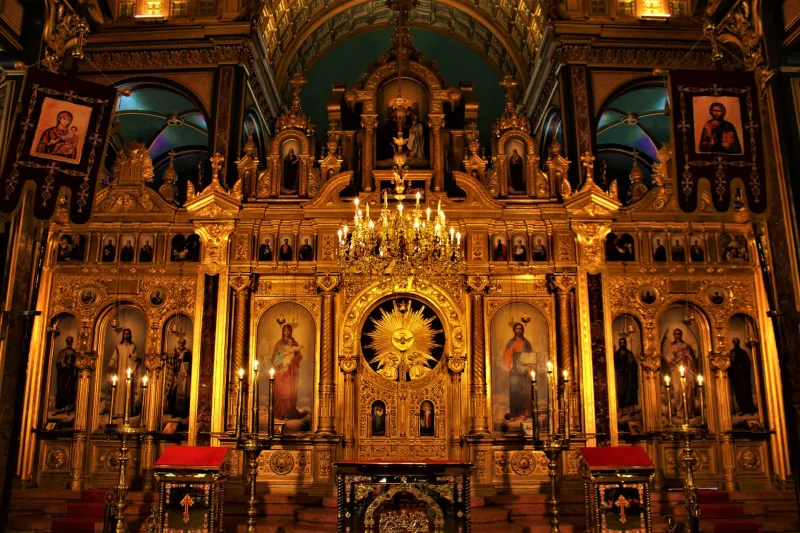
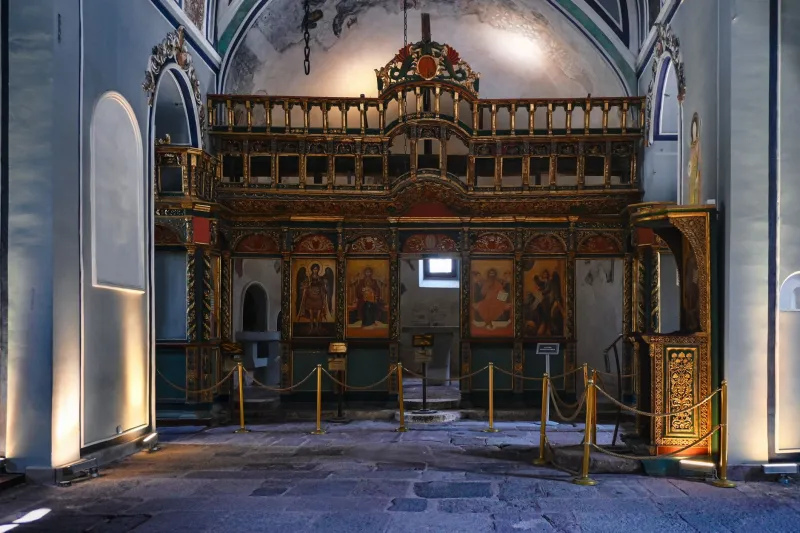
The parish's early iconostasis — the carved and painted screen that separates the nave from the sanctuary in Orthodox churches — was commissioned from a craftsman in the immigrant community itself, a carpenter from the Lublin region who had taught himself the rudiments of ecclesiastical woodworking from pattern books brought from Europe. It was an imperfect but deeply sincere object, and it stood for over forty years before the church was eventually consolidated with a neighboring congregation.
4. The Ford Poles of Detroit: Orthodox Faith on the Assembly Line (1910s–1940s)
Henry Ford's recruitment of European immigrant labor transformed Detroit's ethnic geography in the early twentieth century. Polish workers arrived in enormous numbers, and among them were Orthodox families from the borderland regions who found in the auto industry a form of economic stability unavailable in the agricultural economies they had left behind.
Detroit's Polish Orthodox community was smaller than its Roman Catholic counterpart but no less cohesive. Centered initially around a mission church on the city's east side, it developed a distinctive culture shaped by the rhythms of factory shift work. Liturgical services were scheduled to accommodate workers on rotating shifts — an early and largely unrecognized accommodation of religious practice to industrial labor conditions.
The community also maintained a strong tradition of religious education, operating a Sunday school that taught Church Slavonic alongside Polish language and catechism. For the children of these families — American-born, English-speaking, increasingly distant from the Old World — this education served as a critical thread connecting them to an identity they might otherwise have entirely assimilated away from.
5. The Textile Town Faithful: Polish Orthodox Communities in New England (1920s–1950s)
The mill towns of Massachusetts, Rhode Island, and Connecticut are less frequently associated with Polish immigration than the industrial Midwest, but they harbored significant Polish communities throughout the early twentieth century. Among these were Orthodox families drawn north from New York and New Jersey by the promise of work in the textile industry.
In cities like New Britain, Connecticut, and Woonsocket, Rhode Island, small Polish Orthodox congregations formed in the interwar period, often sharing church buildings with Greek or Russian Orthodox communities in arrangements that required considerable ecumenical goodwill. These were communities without the critical mass to build their own institutions, yet they maintained distinct cultural and liturgical identities within shared spaces.
Their persistence is a testament to something that runs through all five of these stories: the conviction that faith is not a private sentiment but a communal practice, and that communal practice requires communal structure — even when that structure must be improvised, borrowed, or built from almost nothing.
Why These Stories Matter Now
The Polish Orthodox immigrants who built these communities did not expect to be remembered. They expected to work, to worship, to raise children, and to pass something essential on to those children — something that no amount of assimilation pressure could entirely extinguish.
For Polish-Americans today who carry Orthodox heritage, these stories offer more than genealogical curiosity. They offer a model of faithfulness under pressure, of identity maintained without institutional power, of community built through sacrifice rather than circumstance.
At Cerkiew America, we believe that recovering this history is not merely an academic exercise. It is an act of gratitude — and a foundation for the work that remains ahead.