Guardians of the Sacred: How Polish Orthodox Parishes Are Saving Centuries-Old Iconography for Future Americans
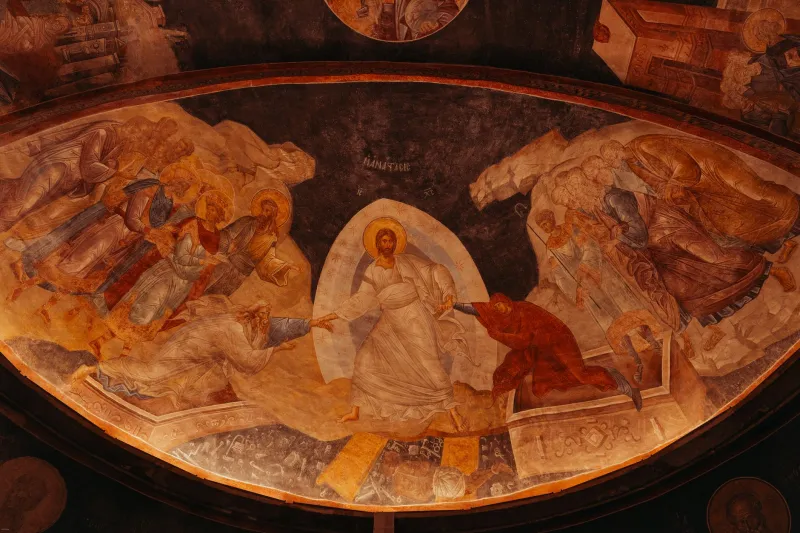
In a modest church hall in northeastern Pennsylvania, a woman in her late sixties carefully unfolds a cloth that has protected a wooden panel icon for the better part of a century. The image beneath — a rendering of the Theotokos, the Mother of God, painted in the Byzantine tradition — is cracked along the upper right corner, its gilded background dulled by decades of candle smoke and fluctuating humidity. She holds it as one might hold a sleeping infant: with absolute deliberateness, with reverence, with love.
"This came with my grandmother from Galicia," she says quietly. "She carried it across the Atlantic. We cannot let it disappear."
This scene, or something very much like it, is playing out in Polish Orthodox parishes from New Jersey to Minnesota. Across the country, communities rooted in the religious traditions of eastern Poland, Galicia, and the Kresy borderlands are confronting an urgent question: how do you preserve sacred art that was never meant to be merely art?
The Theological Weight of an Icon
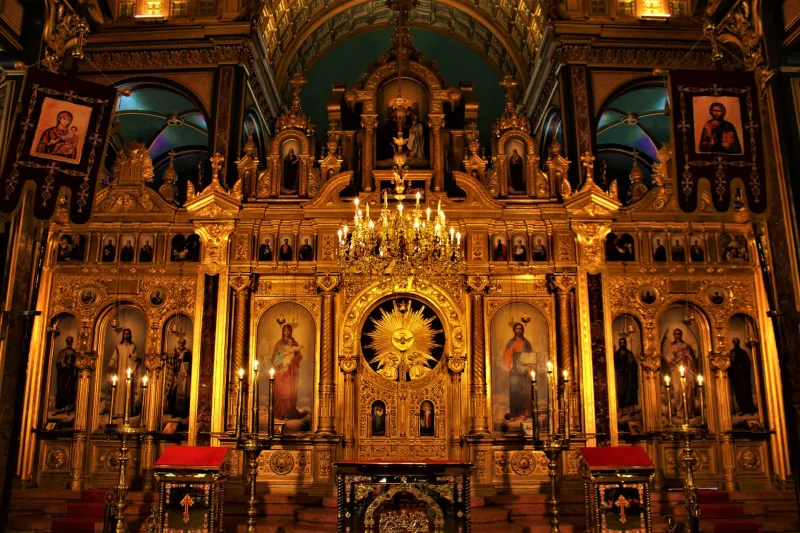
To understand why preservation matters so profoundly to these communities, one must first appreciate what an Orthodox icon actually is — and what it is not. Unlike Western religious paintings, which are generally understood as artistic representations of holy subjects, an Orthodox icon occupies a different ontological category altogether. It is a window, not a portrait. It is a point of encounter between the worshiper and the divine reality it depicts.
Father Aleksander Wierzbicki, pastor of a Polish Orthodox parish in the greater Pittsburgh area, explains it plainly: "When we venerate an icon, we are not venerating wood and paint. We are venerating the prototype — the holy person depicted. The icon participates in the holiness of the one it represents. This is why its loss is not merely a cultural loss. It is a spiritual one."
This theological grounding is precisely what distinguishes Orthodox icon preservation from conventional art conservation. The work is not simply archival. It is, in a very real sense, pastoral.
The Scale of the Challenge
Polish Orthodox parishes in America were established primarily between 1880 and 1940, during successive waves of immigration from what is now eastern Poland, western Ukraine, and Belarus. Many of these congregations built their churches with considerable sacrifice — parishioners donating labor, lumber, and whatever liturgical objects they could bring from the Old Country or commission from immigrant craftsmen.
A century later, those buildings are aging. Roofs leak. Heating systems cycle between extremes that are devastating to painted wood panels. Congregations, in many cases, have shrunk as younger generations have dispersed to suburbs and sunbelt cities. The financial resources required for professional conservation work are, in most parishes, simply not available without external support.
Dr. Maria Kowalczyk, an art conservator based in Philadelphia who has worked with several Polish Orthodox communities in the Mid-Atlantic region, describes the situation with measured urgency. "We are talking about objects that, in many cases, have already survived wars, border changes, and an ocean crossing. The irony is that a stable American church building should be a safe place for them. But without climate control and proper care, even a well-intentioned environment can cause significant damage over decades."
She notes that the most common threats are moisture infiltration, biological growth — particularly mold on organic binding media — and the mechanical stress caused by seasonal wood expansion and contraction. In older church buildings where heating is intermittent, these cycles can be severe.
Younger Hands, Ancient Craft
Perhaps the most encouraging development in this space is the growing involvement of younger Polish-Americans in preservation and iconographic study. Several parishes have established icon-writing workshops — using the traditional term "writing" rather than "painting" to honor the theological and liturgical nature of the craft — that attract participants ranging from college students to professionals in their thirties and forties.
St. Nicholas Polish Orthodox Parish in Chicago has become something of a model in this regard. Its annual icon-writing retreat, now in its seventh year, draws participants from across the Midwest and has produced several young iconographers who have gone on to contribute restoration work to their home parishes.
"I grew up in this church," says one participant, a graphic designer in her early thirties who asked to be identified only by her baptismal name, Natalia. "I always thought of the icons as part of the background — they were just there. When I started learning to write them, I began to understand what they actually are. Now I can't imagine not being involved in this work."
This experiential engagement — learning the craft rather than simply observing it — appears to be among the most effective strategies for transferring not only technical knowledge but also theological appreciation to the next generation.
Institutional Support and the Road Ahead
Several organizations are working to provide structural support for these grassroots efforts. The Orthodox Christian Community Foundation and various diocesan bodies have developed grant programs specifically aimed at conservation projects in smaller parishes. A number of universities with strong art conservation programs have also begun establishing partnerships with religious communities, offering supervised student work as a means of both training conservators and serving parishes that cannot afford full professional fees.
Father Wierzbicki believes the key is connecting these resources to communities before the damage becomes irreversible. "We have a narrow window," he says. "The generation that brought these objects here, that knew their stories, is passing. Once that living memory is gone, we lose something that no restoration can recover — the human thread that connects the icon to its journey."
For the woman in the Pennsylvania church hall, the work is both simple and infinite. She is compiling a written record of every icon in her parish's collection: its approximate date, its provenance as best she can reconstruct it, the names of the families associated with it. It is not a professional archival project. It is, she says, an act of faithfulness.
"Someone preserved these for me," she says, folding the cloth back around the Theotokos panel with the same careful hands. "Now it is my turn."
The icons wait, patient as they have always been, for the next generation of guardians to find them.