Before You Open the Door: A First-Timer's Companion to the Polish Orthodox Liturgy
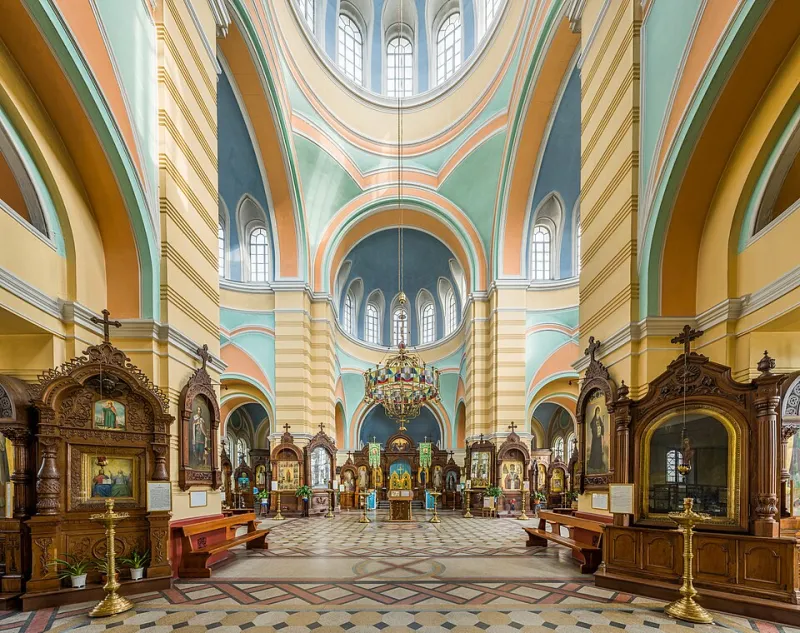
Photo: Diliff, CC BY-SA 3.0, via Wikimedia Commons
Somewhere in your town — perhaps a brick building with three-barred crosses and a small golden dome, perhaps a converted storefront on a street of shuttered mills — there is a Polish Orthodox parish, and you have driven past it for years. Maybe a spouse or fiancé comes from that tradition. Maybe you read an article, heard a chant on a streaming service, or simply feel that American church as usual is missing something. Now you are thinking about walking through the door.
This guide exists to tell you the truth: nobody inside expects you to know anything. The awkwardness you fear is almost entirely in your head. But a little preparation never hurt anyone, so here it is.
When to Arrive, and What You Will Smell
Divine Liturgy on Sunday typically begins around 9:30 or 10:00 a.m., but Orthodox services are not punctual in the Protestant sense — the Liturgy is the second half of a longer morning that began with Matins. Arriving fifteen minutes early is courteous and gives you a chance to light a candle and get your bearings.
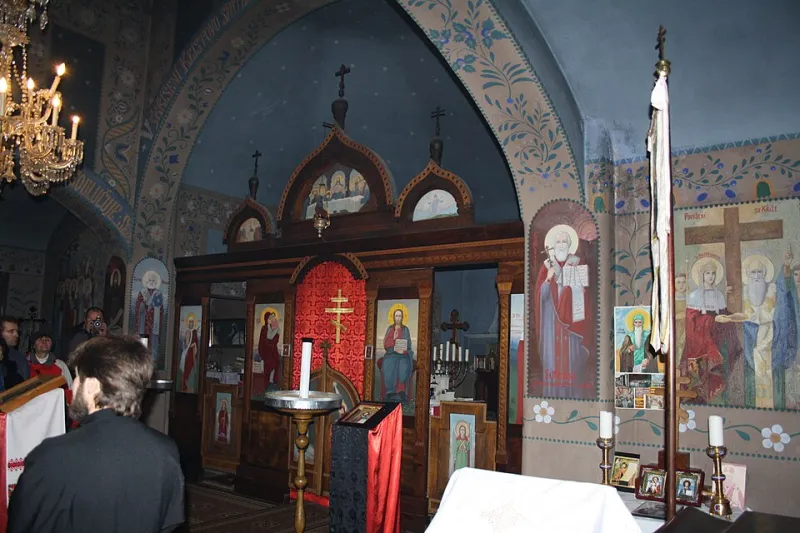
The first thing you will notice is the smell: beeswax, incense, and old wood. This is not atmosphere for its own sake. Orthodox worship is embodied — offered to God through sight, sound, and scent alike. The fragrance is part of the prayer.
Standing, Sitting, and the Mercy of the Back Pew
There are no pews in most Orthodox parishes — or, in American parishes, there may be pews along the walls with open space in the center. The standing posture is traditional, a sign of resurrection joy, but no one will object if you sit, especially if you are elderly, pregnant, or simply new. A good rule: when in doubt, do what the grandmother in front of you does.
You will not be called out, asked to stand and be welcomed, or handed a visitor card. Orthodox hospitality is quiet: coffee afterward, a plate of food, someone asking where you are from.
The Polish Difference
What makes a Polish Orthodox Liturgy distinct? The services are typically conducted in a blend of Polish, English, and Church Slavonic, with Polish hymnody carrying melodies that predate the immigrants themselves. You may hear the troparion of the day sung to a folk-inflected melody from the Carpathian highlands. Announcements may be bilingual. The parish hall afterward will almost certainly feature foods your cardiologist has opinions about.
The ethnic texture is real, but it is a wrapper, not the gift. The faith inside is the ancient Orthodox Christianity of the undivided Church — the same Liturgy, the same theology, the same Eucharist.
Communion, Crossing, and Other Questions
Should you cross yourself? If it is your custom, yes; if not, no one is grading you. Orthodox Christians cross themselves frequently and with the hand held differently than Roman Catholics — thumb, index, and middle finger together — but this is not a test.
Communion is reserved for Orthodox Christians who have prepared through fasting and confession. This is not a judgment of your sincerity; it is an ancient discipline the Church applies to her own members. Simply remain in your place, or approach at the end to receive a blessing from the priest.
Dress modestly and comfortably — you will stand. No hats for men; head coverings for women are welcome but not demanded in American parishes.
The Only Real Rule
The only real rule for a first visit is the one the Church has always kept: come and see. Arrive a little early, stand near the back, breathe the beeswax, and let the Liturgy do what it has done for a thousand years before you were born and will do a thousand years after.
The grandmother in front of you will save you a seat at coffee hour. She always does.