Lost in Translation: The Quiet Erasure of Polish Orthodox Saints' Names and the Spiritual Cost of Assimilation
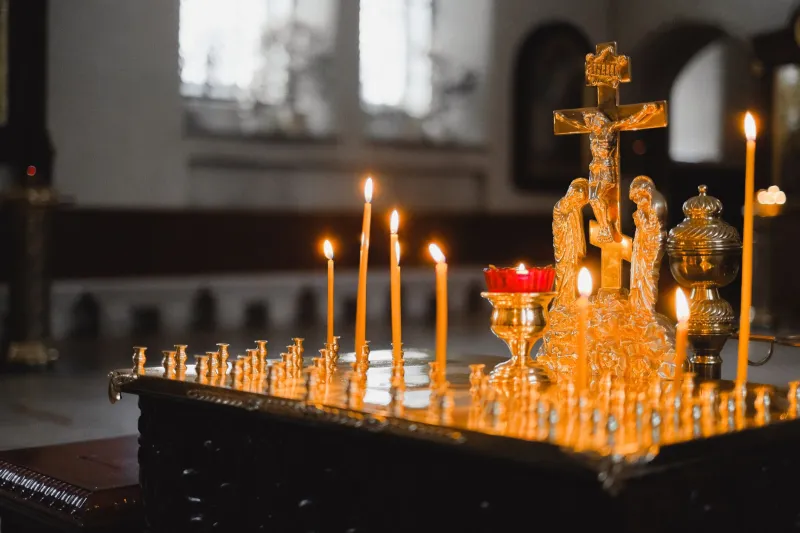
In a modest Orthodox parish in northeastern Pennsylvania, an elderly woman lights a candle before an icon and whispers a name that no one in her congregation's younger generation recognizes. The name she speaks is not Theodore or Theophilus — the anglicized labels printed in the parish bulletin. She speaks Teodor, Teofil — names carried across the Atlantic by her grandparents, names that once anchored an entire devotional world. That world, many fear, is disappearing one syllable at a time.
The anglicization of Polish Orthodox saints' names in America is not a dramatic rupture. It has been a slow, almost imperceptible erosion — driven by the pressures of assimilation, the administrative preferences of hierarchies, and a sincere but ultimately costly desire to make the faith accessible to English-speaking converts and second-generation immigrants. Yet for liturgists, parish historians, and community elders, the consequences of this century-long transformation are neither subtle nor trivial.
A Century of Small Surrenders
The story of name anglicization begins in earnest in the early twentieth century, when waves of Polish Orthodox immigrants settled in the industrial corridors of Pennsylvania, New York, and New Jersey. Parish records from this era reveal an immediate tension: clergy trained in Warsaw or Lviv celebrated feasts under names their American-born children could neither spell nor pronounce. The path of least resistance was adaptation.
Fr. Aleksander Nowak, a liturgist who has spent over two decades studying the devotional practices of Polish Orthodox communities in the Mid-Atlantic states, describes the process as one of gradual institutional normalization. "It was never a single decree," he explains. "It happened bulletin by bulletin, catechism by catechism. A Sławomir became Slavimir, then Slavko, then simply Stephen because someone decided Stephen was close enough. But it is not close enough. These are distinct holy persons with distinct histories."
The consequences extend beyond mere nomenclature. Orthodox spirituality assigns profound significance to the relationship between a believer and their patron saint — a bond established at baptism and renewed throughout one's life through prayer, fasting, and the commemoration of feast days. When a saint's name is altered, even slightly, that bond risks becoming confused or attenuated. Parishioners may find themselves venerating a generalized figure rather than a specific intercessor whose life, martyrdom, or monastic witness carried particular meaning within the Polish Orthodox tradition.
What the Liturgical Texts Reveal
A careful examination of liturgical texts used in Polish Orthodox parishes across the United States over the past century tells a revealing story. Early twentieth-century service books, many of them handwritten or printed in small runs by immigrant communities, preserve a rich array of Polish-inflected names: Kazimierz, Władysław, Jadwiga, Świętosław. By mid-century, these names had largely vanished from printed materials, replaced by their Greek or Slavonic equivalents — or, more commonly, by anglicized approximations that satisfied neither tradition.
Dr. Maria Kowalczyk, a historian at a Polish-American cultural institute in Chicago, has spent years cataloguing these textual shifts. Her findings are striking. "In some parishes, you can trace the exact decade when a particular name disappears from the records," she notes. "It often correlates with a change in parish leadership, a new wave of English-speaking converts, or a diocesan directive about standardizing liturgical language. The names don't vanish because people stopped caring. They vanish because institutions stopped preserving them."
Some of the most striking losses involve saints who occupy a uniquely Polish Orthodox theological heritage — figures whose veneration developed in the borderland regions of historical Poland-Lithuania, where Eastern and Western Christianity intersected in complex ways. These saints carry names that reflect that hybrid heritage: names that are neither purely Greek nor purely Latin, but distinctly Slavic in their formation. Anglicizing them does not merely alter pronunciation; it severs the linguistic connection to the cultural soil from which their holiness grew.
The Convert Question
Among the most contested dimensions of this issue is the role of converts to Orthodoxy — a population that has grown substantially in American parishes over the past three decades. Critics of anglicization sometimes point to convert communities as inadvertent agents of further standardization, favoring Greek or pan-Orthodox naming conventions over distinctly Polish ones. This framing, however, is disputed by many within the convert community itself.
"I came to this faith in part because of its particularity," says one convert parishioner at a Polish Orthodox mission in the Pacific Northwest, who asked not to be named. "I did not want a generic Orthodoxy. I wanted to enter a living tradition with a specific history. When I learned that the names in our service books had been smoothed over for convenience, I felt I had been given a curated version of the faith rather than the real thing."
This perspective — that authentic particularity is itself an evangelical asset rather than an obstacle — is gaining traction among younger clergy and seminary students. Several Orthodox seminaries in the United States have begun incorporating sessions on the recovery of ethnic liturgical traditions, including the restoration of historically accurate saints' names, into their formation programs.
Reclaiming What Was Lost
The movement toward restoration is modest but earnest. In several parishes along the Eastern Seaboard, priests have begun reintroducing Polish-form names into feast-day commemorations, accompanied by brief catechetical notes explaining the historical and spiritual significance of each name. The response, according to those involved, has been largely positive — particularly among older parishioners who recognize the names from their grandparents' devotional practice.
Fr. Nowak acknowledges that the path forward requires sensitivity. "We are not trying to alienate anyone," he says carefully. "We are not saying that a parishioner named James has been worshipping incorrectly because the Polish form of that name is Jakub. We are saying that knowing the fullness of a tradition — including its names, its linguistic textures, its specific saints — makes one's faith richer, not narrower."
The question of whether reclaiming these names constitutes cultural preservation or unnecessary friction in a diverse American church does not resolve cleanly. What is clear is that every name quietly replaced represents a small but real diminishment of the living memory that connects Polish Orthodox Americans to their spiritual ancestors. And in a tradition that places such weight on the communion of saints — on the unbroken conversation between the living and the holy dead — that diminishment is not merely cultural. It is theological.
The candle burns. The old woman finishes her prayer. Outside, the parish bulletin lists a name she does not recognize as her own.