Rescued from Silence: How Polish-American Orthodox Communities Are Using Digital Archives to Reclaim a History the Soviet Era Nearly Destroyed
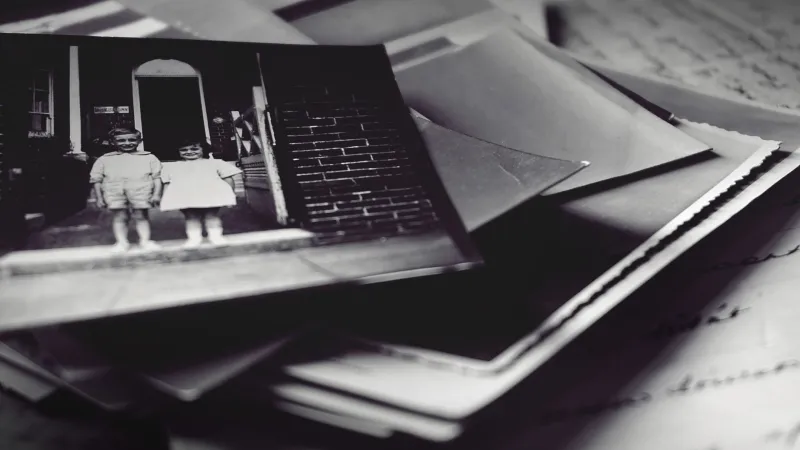
In the archives of a small Orthodox church in western Massachusetts, a manila envelope sat unopened for forty years. Inside were photographs — faded, water-damaged, unlabeled — of a parish in the Białystok region of Poland that had ceased to exist by 1952. The church had been seized, the congregation dispersed, the records confiscated. The photographs had survived only because a departing priest had sewn them into the lining of his coat before crossing into the West.
That envelope, and thousands of items like it scattered across American parishes, private homes, and immigrant community centers, is now at the center of one of the most consequential historical recovery efforts in the Polish-American Orthodox world. Driven by younger generations who grew up hearing fragments of stories their grandparents were afraid to tell in full, a grassroots digitization movement is transforming those fragments into a retrievable, searchable, and shareable record of faith under siege.
The Wound the Soviet Era Left Behind
To understand what is being recovered, one must first understand what was taken. The Soviet occupation of eastern Poland — and the subsequent imposition of Communist governance over Polish territory following World War II — was catastrophic for Orthodox Christian communities in ways that Western historical accounts have often underrepresented. Churches were confiscated or demolished. Clergy were arrested, exiled, or killed. Parish registries — the metrical books recording baptisms, marriages, and burials that form the bedrock of both genealogical and ecclesiastical history — were seized by state authorities, destroyed outright, or allowed to deteriorate in poorly maintained state archives.
The Orthodox communities of the Podlasie and Chełm regions, which had maintained continuous religious life for centuries, were among the hardest hit. Many of the faithful who survived emigrated, carrying what little documentary evidence they could conceal. What arrived in America was fragmentary: a baptismal certificate here, a parish photograph there, an oral account preserved in the memory of a grandmother who had witnessed the closure of her home church at gunpoint.
"People did not speak about these things openly, even here," explains Helena Brzeska, a second-generation Polish-American in New Jersey whose family emigrated from the Białystok region in the early 1950s. "There was grief, certainly. But there was also fear — a residual fear that talking too loudly about what had been lost would somehow make things worse. It took a generation of distance before people were ready to look directly at what happened."
A New Generation Takes Up the Work
That willingness to look directly — and to act — has produced a remarkable array of community-driven archival projects across the United States. In cities with significant Polish Orthodox populations, including Chicago, Philadelphia, and Pittsburgh, informal working groups have formed to systematically digitize the documentary holdings of local parishes. The tools they employ range from professional archival scanners to smartphone cameras; the platforms they use include dedicated Orthodox genealogical databases, Ancestry.com, and custom-built repositories hosted by parish websites.
One of the most ambitious of these efforts is the Eastern Borderlands Orthodox Heritage Project, a volunteer initiative that has spent the past six years collecting and digitizing materials from parishes in six states. Its digital repository now holds over fourteen thousand items: photographs, correspondence, handwritten service registers, land deeds for demolished church properties, and audio recordings of oral histories gathered from elderly parishioners before their deaths.
Andrzej Piotrowski, one of the project's founding coordinators and a software engineer by profession, describes the work as simultaneously technical and deeply personal. "My grandfather never told me the full story of what happened to his parish in Poland," he says. "I found out through a document someone else had digitized — a Soviet-era confiscation order that listed the church's contents, down to the last candlestick. That document was sitting in a state archive in Warsaw, but a volunteer had photographed every page and uploaded it. That is how I learned what my grandfather lost."
What the Archives Are Revealing
The discoveries emerging from these digitization efforts are already reshaping scholarly and community understanding of Polish Orthodox history in significant ways. Several projects have uncovered evidence of organized lay resistance to church closures during the Soviet period — quiet, persistent, and previously undocumented acts of preservation by ordinary parishioners who hid liturgical objects, copied service books by hand, and maintained informal prayer gatherings in private homes.
Other findings have corrected long-standing misunderstandings about the demographics and geographic distribution of Polish Orthodox communities before the war. Parish records recovered through digitization reveal a far more extensive network of Orthodox congregations in regions that Soviet-era historiography characterized as predominantly Roman Catholic — a distortion that served ideological purposes but obscured the genuine religious complexity of the Polish borderlands.
Dr. Tomasz Wiśniewski, a historian of Eastern Christianity at a university in the Mid-Atlantic region, has been working with several of these archival projects to incorporate their findings into peer-reviewed scholarship. "These community archives are not supplementary to the historical record," he argues. "In many cases, they are the historical record. The official archives were curated by governments with ideological agendas. What survived in people's attics and church basements is often more truthful."
The Challenges of Crowdsourced History
The movement is not without its complications. Crowdsourced archiving raises legitimate questions about provenance verification, metadata consistency, and long-term digital preservation. Items uploaded without proper documentation can be misidentified or misattributed, and the decentralized nature of many of these projects means that quality control varies significantly from one initiative to the next.
There are also sensitive questions about privacy and pastoral discretion. Parish records often contain information about individuals whose living descendants may not wish to see that information made publicly searchable — records of canonical irregularities, for instance, or documentation of family members who collaborated with Soviet authorities under duress.
Those leading the most serious digitization efforts are acutely aware of these concerns and have developed protocols to address them. The Eastern Borderlands Orthodox Heritage Project, for example, restricts access to certain categories of documents and requires researchers to register and state their purpose before accessing sensitive materials.
Faith as the Organizing Principle
What distinguishes these Polish-American Orthodox archival efforts from purely secular genealogical projects is the explicitly theological dimension that animates them. For those involved, the recovery of lost parish records is not merely an exercise in historical scholarship. It is an act of witness — a refusal to allow the violence of an atheist state to have the final word over communities that organized their entire lives around the liturgical calendar, the sacraments, and the veneration of saints.
"The Communists thought they could erase us by destroying our documents," says Helena Brzeska. "But we are still here. And now we are finding the documents they thought they had destroyed. Every page we recover is a kind of resurrection."
That language — resurrection, recovery, witness — recurs with striking frequency among those engaged in this work. It reflects a conviction, deeply rooted in Orthodox theological sensibility, that history is not merely a secular phenomenon to be managed but a sacred inheritance to be honored and transmitted. The digital archive, in this understanding, is not a technological novelty. It is the newest form of an ancient obligation: to remember, to preserve, and to hand on.
The manila envelope from western Massachusetts has now been fully digitized. The photographs it contained have been identified, cross-referenced with other recovered materials, and linked to the names of the families depicted. The parish they recorded no longer stands. But it can now be seen.