Paper Saints: Ten Devotional Cards That Ride in Wallets, Sun Visors, and Kitchen Drawers
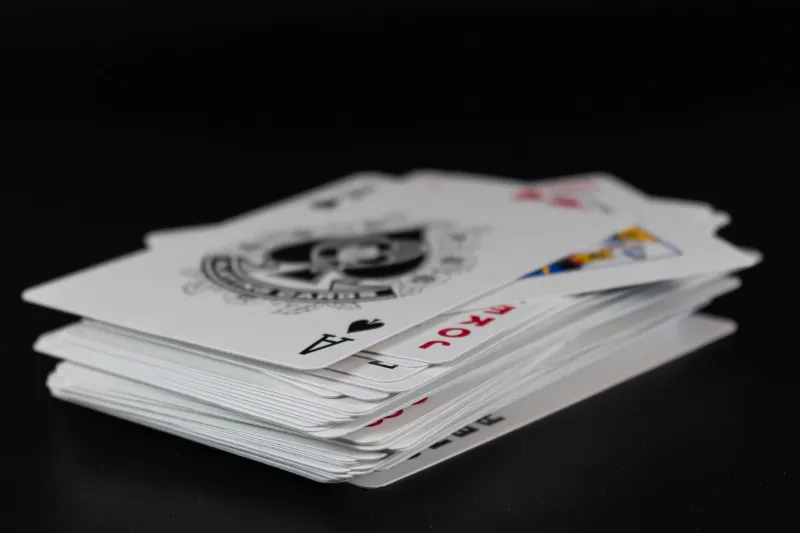
Every Polish Orthodox home in America has one. The drawer in the kitchen that also holds the twist ties. The glove compartment, next to the expired insurance card. The back of the prayer book, where a scalloped edge of card stock has been softening for thirty years.
A holy card is, technically, a reproduction of an icon with a prayer on the reverse. Functionally, it is something stranger: a portable household relic. It survives funerals, moves, divorces, and the death of the person who gave it to you, and it does so because it is too small to throw away and too specific to ignore.
Here are ten that show up again and again in Polish Orthodox America. Look through your own drawer and see how many you recognize.
1. The Wilno Mother of God (Ostra Brama)
The card that seems to be everywhere. The image is the darkened, gold-chased Madonna of the Gate of Dawn, venerated in Wilno for centuries and carried to America in the luggage of families from the eastern borderlands. You will find her in Polish homes, Lithuanian homes, and, increasingly, in the prayer books of confused converts who picked one up at a rummage sale and felt responsible for it ever since. The classic card has the two crescent scars of the original and a Polish prayer on the back; if yours is in Lithuanian on the reverse, it came through Chicago.
2. Our Lady of Częstochowa
The Black Madonna, unmistakable with her slashed cheek — a detail beloved of children, who always ask about the two lines. In Orthodox usage the card is often printed without the heavy Roman framing, and parishes of Polish heritage hold her as a family patron. The image's migration is the whole Polish story in one rectangle: Jasna Góra to Kraków to Hamburg to a steamship to a hallway in Passaic.
3. Saint Nicholas of Myra
The universal emergency contact. Every Polish Orthodox household has at least one, usually in a plastic sleeve, often with a small coin glued beneath the plastic for luck — a custom the pastor has quietly given up fighting. Look for the Greek-style Nicholas with the Gospel closed, or the older variant where the Gospel is open. Both are legitimate; the variation runs down the printing presses of a dozen jurisdictions.
4. Saint Michael the Archangel
The one on the car visor. Michael in armor, sword lifted, sunburst behind the shield. He is the card most likely to be found in the glove compartment, and the one most likely to be found in a vehicle that has been in an accident. There is a whole unwritten American tradition of the archangel as traffic patron, and it did not come from a council; it came from people who drove a lot.
5. Saint George the Trophy-Bearer
Red cloak, white horse, spear. In Polish Orthodox homes he is both the warrior and the farmer's saint, and the card often shows up in the hands of men who served — the church's answer to the old country's military pilgrimages. The reverse usually carries the troparion in both rites' spelling, which tells you which era of printing it came from.
6. Saint Gabriel of Zabludów
Poland's own child martyr, killed at seven years old in 1690 and venerated for centuries in the northeast. The card is one of the most moving in the whole drawer: a small boy in a long coat, holding a cross, often printed on cheap stock with a prayer requesting his intercession for children. If a family has a card of Saint Gabriel, it usually means someone in that family lost a child, or feared losing one.
7. Saint Job of Pochaev
The monastic saint of the borderlands, patron of the Polish Orthodox diaspora in a way that has never been formally declared. He appears older, gaunt, crowned in the monastic schema. His card circulates heavily in parishes of Carpatho-Russian and Podlasie stock and is frequently tucked into the front of a Psalter rather than into a wallet.
8. Saint Panteleimon the Healer
The hospital card. Parents pack it into the hospital bag without thinking about it, the way they pack a toothbrush. He holds the medicine box with the spoon, and the printing on the back is often a general petition for the sick that has been used so many times the ink is blurred from handling.
9. The Guardian Angel
The most-changed card in any drawer. Guardian angel imagery in American Orthodox printing borrows heavily from Western sentimentalism, and the results range from gorgeous to regrettable. The one that survives is almost always the one given to a child at baptism, with a name written in pencil on the back in a hand that has since died.
10. Saints Cyril and Methodius
The card that gets the least attention and does the most work. The patrons of the Slavic mission, holding the alphabet like a scroll. In Polish Orthodox parishes that have moved to English, this card hangs in a strange place: it honors the language of the Liturgy while quietly conceding that the language has changed. It is the card most likely to be found pinned above a priest's desk.
Reading Your Own Drawer
If you take your own stack out and go through it slowly, you will find that the cards are not random. They cluster around three experiences: migration, illness, and childhood. A card is a record of a particular fear survived or a particular grace received, and the wear on the corners tells you which.
The paper saints are not decorations. They are the household's memory of the Church, kept at a size that fits in a palm. Take them out once a year, wipe the drawer, and ask who gave you each one. You will learn your own family history from a stack of laminated cards — and you will probably find, tucked at the bottom, a saint you had forgotten you needed.