Between Two Worlds: How Polish Orthodox Families Are Guarding Their Children's Faith in an Age of Secular Schooling
A Sacred Responsibility Meets a Secular Classroom
Every autumn, millions of American children return to classrooms where religious expression is, at best, politely tolerated and, at worst, quietly discouraged. For Polish Orthodox families, this annual ritual carries a particular weight. The child who spent Sunday morning chanting Liturgy in a candlelit nave must spend Monday morning in an environment that treats faith as a private matter — if it acknowledges it at all.
This tension is not new. Polish Orthodox immigrants have navigated the pressures of American secular life since the first wave of arrivals in the late nineteenth century. What is new, however, is the degree to which public schools have become ideologically assertive rather than merely religiously indifferent. Godparents and parents within Polish Orthodox communities across the country report that the challenge is no longer simply one of maintaining practice; it is increasingly one of defending theological identity against competing frameworks that children encounter daily.
The godparent's role, in this context, has never been more consequential — or more demanding.
What the Church Has Always Required of Godparents
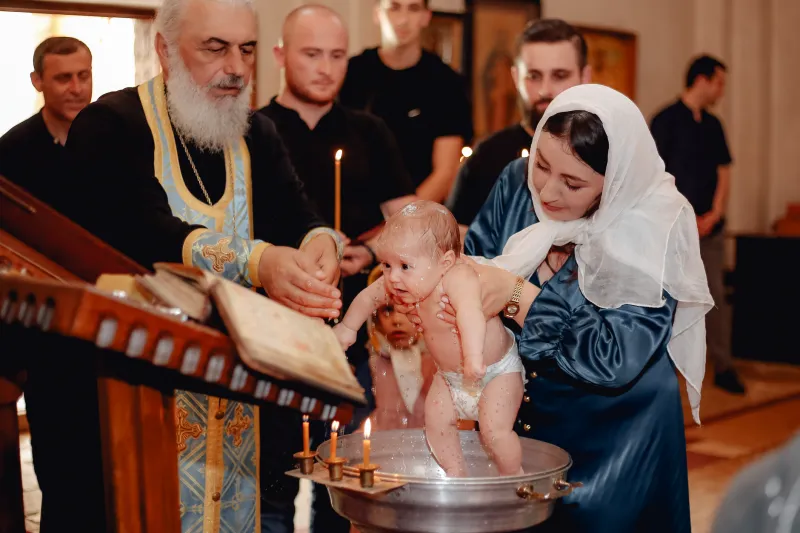
In Orthodox Christian tradition, the godparent is not a ceremonial figure. The role carries genuine ecclesiastical weight. At baptism, the godparent stands as a spiritual guarantor — a witness who pledges before God and the Church to assist in the formation of a soul. This is not a metaphor. It is a covenant.
For Polish Orthodox communities, this understanding has been reinforced by centuries of experience in which faith was transmitted not primarily through institutions but through networks of family and godparent relationships. Under Tsarist pressure, under Soviet occupation, and under the grinding secularism of postwar Poland, the Church survived in large part because laypeople — godparents among them — treated spiritual formation as a personal responsibility.
That same instinct is being reactivated in American parishes today. "We tell our godchildren that what they learn in church on Sunday is not a supplement to their education," said one godfather in a Polish Orthodox parish in Pennsylvania. "It is the foundation that everything else must be measured against."
The Practical Architecture of Orthodox Formation at Home
Across communities in New Jersey, Illinois, New York, and beyond, Polish Orthodox families have developed what might be called a domestic curriculum — a structured but organic set of practices designed to ensure that the faith is not crowded out by the demands of secular schooling.
Morning and evening prayers remain the cornerstone. Many families report that establishing a consistent prayer rule — even a brief one — anchors the child's day within a theological framework that the classroom cannot erase. Icons in the home serve a similar function, providing visual reminders of a reality that transcends whatever the school day brings.
Godparents are increasingly taking an active role in this process. Some schedule regular visits or phone calls specifically to discuss what a godchild is learning in school and to offer an Orthodox perspective on subjects that touch on faith, ethics, or human nature. Others coordinate with parents to ensure that significant feast days are observed with appropriate solemnity, even when they fall on school days.
The goal, as one godmother in Chicago described it, is to make Orthodoxy "the air the child breathes, not a coat they put on for church."
When the Classroom Pushes Back
Not every challenge is philosophical. Polish Orthodox families also navigate specific, concrete conflicts between school curricula and Orthodox teaching. Questions of human anthropology, the nature of marriage and family, and the moral frameworks embedded in literature and history classes can place children in uncomfortable positions.
Priests and parish educators within Polish Orthodox communities counsel a response that is neither combative nor capitulatory. Children should be equipped, they argue, to engage secular ideas with confidence rather than anxiety — to understand what the Church teaches and why, so that they can articulate their convictions respectfully without feeling threatened by alternative views.
This requires preparation. Several parishes have introduced supplemental catechetical programs designed specifically to address the topics children are likely to encounter in school. These programs draw on the robust tradition of Orthodox apologetics while remaining accessible to young learners. Godparents are often invited to participate alongside their godchildren, reinforcing the bond of spiritual mentorship while deepening their own theological formation.
"We cannot expect children to defend what they have never been taught," observed one parish priest in New Jersey. "Godparents who are engaged in this work are giving their godchildren the tools they need not just to survive in a secular environment but to witness within it."
The Parish as Educational Partner
Individual families and godparents do not bear this responsibility alone. The parish community itself plays an indispensable role in sustaining Orthodox identity through the school years. Sunday school programs, youth groups, and parish retreats provide children with a peer community that shares their faith — something that can be difficult to find in a secular school setting.
Polish Orthodox parishes with active youth programs report that children who maintain strong parish connections through their school years are significantly more likely to remain practicing members of the Church into adulthood. The friendships formed within the parish become a kind of protective network, offering young people a social world in which their faith is normal and celebrated rather than eccentric.
Godparents who remain actively involved in parish life model this belonging for their godchildren. When a child sees that their godfather is a reader at Liturgy, or that their godmother serves on the parish council, they receive a powerful message: the Church is not a childhood phase. It is a lifelong community.
Recovering an Ancient Pattern for a Modern Problem
There is something deeply fitting about the fact that Polish Orthodox communities are turning to godparenthood as a primary instrument of spiritual resilience. The institution itself was designed for exactly this kind of challenge — for moments when the surrounding culture cannot be relied upon to support the transmission of faith, and when the Church must depend on committed individuals to carry the tradition forward in personal, relational terms.
The secular school is, in one sense, simply the latest in a long series of environments in which Polish Orthodox faith has had to prove its vitality. It has survived far more hostile conditions. The families and godparents who are taking their responsibilities seriously today are participating in a tradition of faithfulness that stretches back centuries.
Their work is quiet, largely invisible to the wider culture, and entirely essential. In the hours between Sunday Liturgy and the following Sunday, it is they who keep the flame burning.