More Than a Name at the Font: How Polish Orthodox Godparents Are Reclaiming a Sacred Duty in American Family Life
In Polish Orthodox tradition, the крестные — the godparents — have never been ceremonial figures. They are spiritual co-parents, bound by sacramental obligation to guide a soul through every season of life. Across the United States today, a quiet but determined movement within Polish Orthodox communities is restoring this ancient model of godparenthood against the tide of a culture that has largely reduced the role to gift-giving and sentimental photographs.
The contrast is difficult to ignore. In mainstream American life, the word "godparent" conjures images of a beloved aunt or a college friend honored at a baptism, someone who sends birthday cards and perhaps a generous check at graduation. The spiritual dimension, if it ever existed, tends to evaporate within a generation. For families rooted in Polish Orthodox Christianity, however, the crестные relationship carries a weight that secular American culture is only beginning to rediscover — and which traditional communities have never set aside.
The Theological Architecture of Spiritual Parenthood
To understand why Polish Orthodox godparenthood functions so differently, one must first appreciate what the sacrament of Holy Baptism means within the Orthodox theological framework. Baptism is not a naming ceremony or a cultural rite of passage. It is, as the Church Fathers consistently taught, the death of the old self and the resurrection into new life in Christ. The newly baptized — whether an infant or an adult — enters the Body of the Church not merely as a member of a congregation but as a participant in the divine life itself.
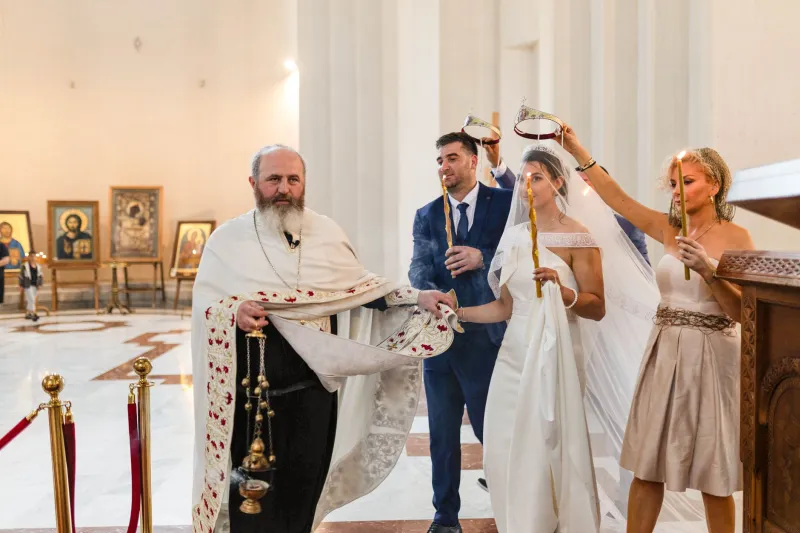
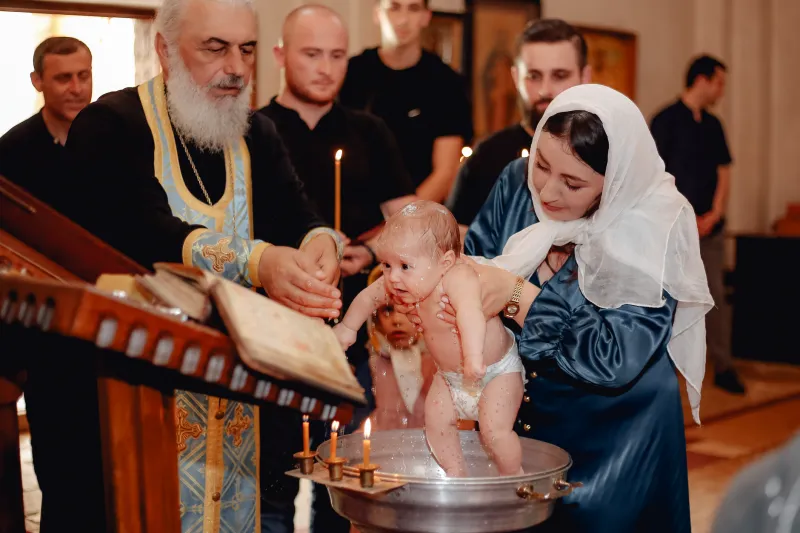
The крестные stand at this threshold as witnesses and guarantors. In the traditional rite, the godparent physically holds the child during chrismation, recites the Nicene Creed on the child's behalf, and renounces Satan in the child's name. These are not symbolic gestures. They are covenantal acts, and the Orthodox Church has historically understood them as establishing a bond of spiritual kinship — kumovstvo — that carries lifelong moral and spiritual obligations.
Father Aleksander Wierzbicki, who serves a Polish Orthodox parish in the Chicago metropolitan area, describes it plainly: "When you become a крестный, you are not simply agreeing to be fond of this child. You are agreeing before God that if something happens to the parents — whether death, illness, or spiritual failure — you will be there. You will pray for this soul. You will teach this soul. The Church does not allow you to forget."
What Kumovstvo Looks Like in Practice
For families who take the tradition seriously, the godparent relationship structures the entire arc of a child's religious formation. In many Polish Orthodox households, the крестные are expected to be present not only at baptism but at the child's first confession, first Holy Communion, and eventually at their wedding. They are consulted during periods of spiritual crisis. They pray by name for their godchild at every Divine Liturgy.
Anna Kowalczyk, a mother of three in the greater Philadelphia area, describes how her own godmother shaped her understanding of Orthodoxy far more profoundly than any Sunday school curriculum. "She would call me on my name day — not my birthday, my name day — every single year. She sent me icons when I moved away for college. When I was drifting, she didn't lecture me. She just kept showing up, kept praying, kept being present. That is what a крестная does."
This model of persistent, patient, sacramentally grounded accompaniment stands in stark contrast to the passive role most American godparents inhabit by default. The difference is not merely cultural. It is theological. Polish Orthodox communities understand that the soul entrusted to a godparent's care is genuinely entrusted — that the crестные will one day give an account before God for how seriously they took that responsibility.
A Counter-Cultural Force in Contemporary American Parenting
The revival of serious godparenthood within Polish Orthodox communities in the United States is increasingly being recognized as something more than a preservation of ethnic custom. It is, in the eyes of many clergy and lay leaders, a deliberate counter-cultural act.
American parenting culture tends to locate all spiritual authority within the nuclear family — or, more commonly, to defer that authority entirely to professional educators, therapists, and institutional programs. The extended network of spiritual kinship that the крестные relationship represents offers an entirely different model: one in which the formation of a child's soul is understood as a communal responsibility, distributed across a web of accountable adults who are bound not by sentiment but by sacrament.
Deacon Piotr Malinowski, who leads a parish family ministry in New Jersey, has observed a notable shift in how younger couples within his community approach the selection of godparents. "Ten years ago, people chose godparents the way Americans generally do — someone close, someone they liked, someone who would be honored by the gesture. Now I see couples asking much harder questions. Is this person practicing the faith? Will they pray for our child? Will they be honest with our child about spiritual matters even when it is uncomfortable? That is a meaningful change."
The selection process itself has become, in many families, an act of communal discernment. Prospective крестные may be asked to meet with the parish priest, to articulate their own understanding of the sacramental obligations involved, and to commit to specific practices — regular prayer for the godchild, annual visits on the name day, participation in the child's major ecclesiastical milestones.
Recovering What Was Nearly Lost
The history of Polish Orthodox immigration to the United States is, in many respects, a history of preservation under pressure. Successive generations faced the erosion of language, the disruption of parish life, the relentless gravitational pull of assimilation. Many of the traditions that survived did so because individual families chose to maintain them against considerable social pressure.
The крестные tradition is no exception. In parishes where the old ways were abandoned — where godparenthood became indistinguishable from its secular American counterpart — the consequences were visible across generations: weaker catechetical formation, higher rates of departure from the faith in young adulthood, and a diminished sense of communal spiritual accountability.
Where the tradition was preserved, the results tell a different story. Families with engaged, theologically serious godparents consistently report stronger retention of Orthodox identity into adulthood. The godparent relationship, when functioning as the tradition intends, provides a form of spiritual redundancy — a secondary network of faith that supports and reinforces the work of parents and parish alike.
An Invitation to Seriousness
For those outside the Polish Orthodox tradition who encounter this model, the initial reaction is sometimes one of surprise. The depth of obligation, the liturgical formality, the expectation of lifelong engagement — these can seem demanding in a religious culture that increasingly prizes convenience and minimal commitment.
But that demanding quality is precisely the point. The крестные tradition does not ask godparents to be present when it is easy. It asks them to be present when it is necessary — at the moments of spiritual vulnerability, doubt, and transition that define every human life. It asks them to pray when no one is watching, to speak truthfully when flattery would be simpler, and to model the faith with the consistency that only genuine conviction can sustain.
In a nation where the spiritual formation of children is increasingly treated as an optional supplement to secular education, the Polish Orthodox understanding of godparenthood offers something genuinely rare: a structured, sacramentally grounded, communally accountable system for transmitting the faith across generations. It is an ancient practice. And in contemporary America, it may be more urgently needed than ever.