The Women Who Hold the Keys: How Polish Orthodox Guilds Became the Invisible Backbone of American Parish Life
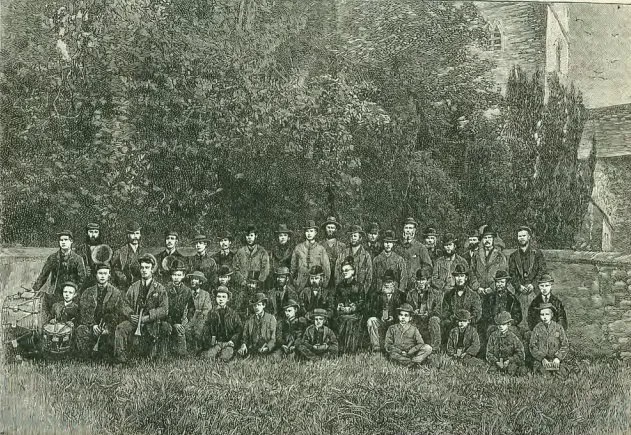
Photo: The girls own paper 1887, Public domain, via Wikimedia Commons
Tuesday evenings in the basement of a Polish Orthodox parish in central Connecticut follow a reliable rhythm. Folding tables are arranged in a rough square. Coffee is brewed in an industrial urn. Women ranging in age from their late twenties to their mid-eighties settle into chairs with notebooks, manila folders, and the particular air of people who know exactly what they are doing.
They are the parish women's guild. Tonight's agenda runs to eleven items. It includes the repair of the parish hall roof — a matter the formal parish council has been deferring for eight months — the allocation of funds for a new set of liturgical vestments, the coordination of a meal ministry for three homebound parishioners, and a quiet conversation about the spiritual welfare of a family going through a difficult divorce. Before the evening ends, decisions will be made, money will be committed, and care will be organized. None of it will appear in the official minutes of the parish council.
Governance Without the Title
This Tuesday-night reality is not unique to Connecticut. Across Polish Orthodox communities in the United States, women's guilds — variously called sisterhoods, ladies' circles, or auxiliary societies — function as the de facto administrative and spiritual infrastructure of their parishes. They raise a disproportionate share of parish revenues. They maintain institutional memory across decades of pastoral turnover. They identify needs, mobilize resources, and make decisions that shape the direction of their communities in ways that formal governance structures rarely acknowledge.
The gap between what these organizations do and how they are recognized within the formal life of the Church is, by any candid accounting, significant.
"The parish council meets once a month and argues about the parking lot," said one guild president who has served her parish in western Pennsylvania for over two decades. "We meet every week. We know who is sick, who is struggling financially, who the young people are drifting away from the faith, what the choir director needs, what the priest is too proud to ask for. We are not running the Church in any official sense. But nothing runs without us."
This is not a complaint, she was careful to note. It is, rather, a frank description of an arrangement that has evolved organically over generations and that most guild members regard as entirely consonant with their understanding of Orthodox womanhood — a vision shaped not by contemporary ideological categories but by the deep tradition of feminine service and intercession that runs through the Church's history.
The Pierogi Economy and What It Actually Funds
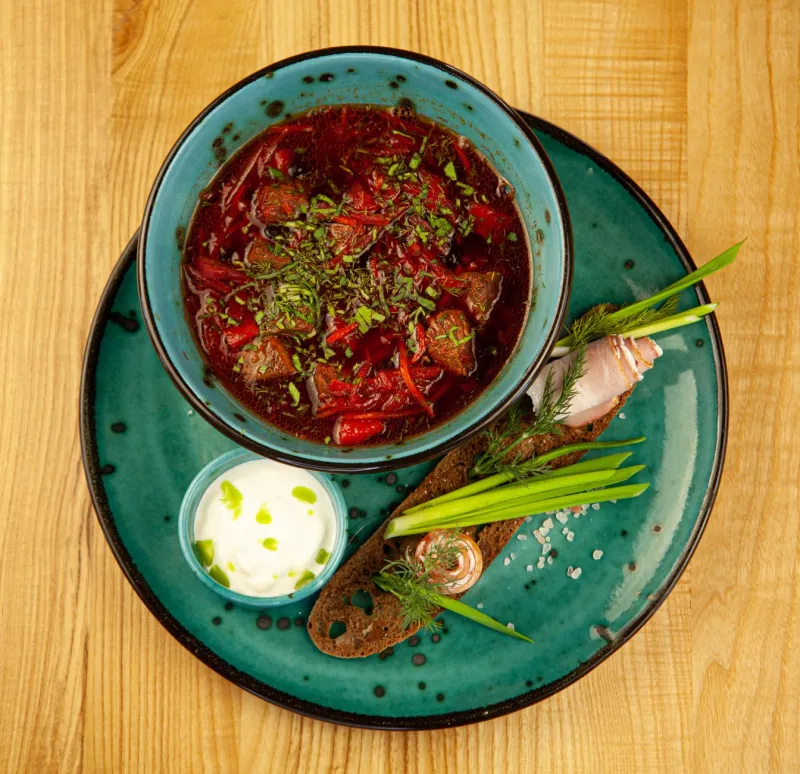
The pierogi dinner has become something of a cultural shorthand for Polish Orthodox parish fundraising — a warm, familiar image that obscures the sophisticated financial operations these guilds actually conduct. The annual dinner, the Lenten bake sale, the Christmas market: these events are real, beloved, and genuinely important. But they are also, in many parishes, the visible surface of a much more complex financial enterprise.
Guilds in larger Polish Orthodox communities manage endowment funds, coordinate grant applications to Orthodox charitable foundations, negotiate vendor contracts for parish facilities, and maintain financial reserves that have, on more than one occasion, kept a struggling parish solvent during a period of pastoral vacancy or economic hardship.
"People think the pierogi dinner is a quaint tradition," said a financial officer of a guild in New York State whose annual operating budget exceeds forty thousand dollars. "It is also a cash flow mechanism. We know exactly how much we need to raise each quarter to cover the gaps in the parish budget. The dinner is one instrument in a larger strategy."
The theological framing these women bring to their financial stewardship is instructive. They do not speak of fundraising in the language of nonprofit management, though they are often as capable as any nonprofit professional. They speak, instead, of offering — of material resources consecrated to the service of God and neighbor. The distinction is not merely rhetorical. It reflects a genuinely different understanding of what institutional labor means within a sacramental community.
Keepers of Memory
Perhaps the most consequential and least visible function these guilds perform is the preservation of institutional memory. Polish Orthodox parishes in America have experienced considerable pastoral instability over the decades — priests transferred, retired, or departed under difficult circumstances; parish councils dissolved and reconstituted; records lost or poorly maintained. Through all of this, the women's guilds have remained.
They hold the photographs from the 1952 parish picnic and the ledger from the 1968 building campaign. They remember which family donated the icon of the Theotokos above the side altar and why it was placed there. They know the history of the parish's relationship with its diocese, including the painful chapters that official histories tend to omit. This memory is not merely sentimental. It is a form of institutional wisdom that shapes how a community understands itself and navigates its present.
"When a new priest comes," said one longtime guild member in Ohio, "we are the ones who tell him the story of this place. Not in an adversarial way. But he needs to know what this parish has been through to understand what it needs now. We are the continuity."
Recognition, Reluctance, and the Orthodox Vision of Service
Conversations about whether women's guilds deserve greater formal recognition within Orthodox ecclesiastical structures are neither simple nor uniform. Many guild members are genuinely uninterested in formal titles or positions within the parish council or diocesan administration. Their understanding of service is explicitly non-hierarchical — rooted in the Orthodox theology of diakonia, of self-giving love that does not require institutional validation.
Others, particularly younger members, express a more nuanced view. They affirm the tradition of feminine service wholeheartedly while also noting that the complete invisibility of guild leadership in formal parish governance creates practical problems — decisions made without the knowledge of those who will implement them, financial commitments undertaken without the input of those who will fund them.
"I am not interested in a title," said one thirty-four-year-old guild member in Massachusetts who holds a graduate degree in nonprofit administration. "I am interested in the parish functioning well. And sometimes that requires people in formal authority to acknowledge that they do not, in fact, have the full picture."
What is clear, across every community where this conversation is taking place, is that the women's guilds of Polish Orthodox America are not auxiliary to parish life. They are, in the most practical and immediate sense, parish life itself — sustained by faith, organized by competence, and offered, Tuesday after Tuesday, as a quiet act of devotion.