Sacred Recipes in a Secular Scroll: What Happens When Polish Orthodox Fasting Food Goes Viral
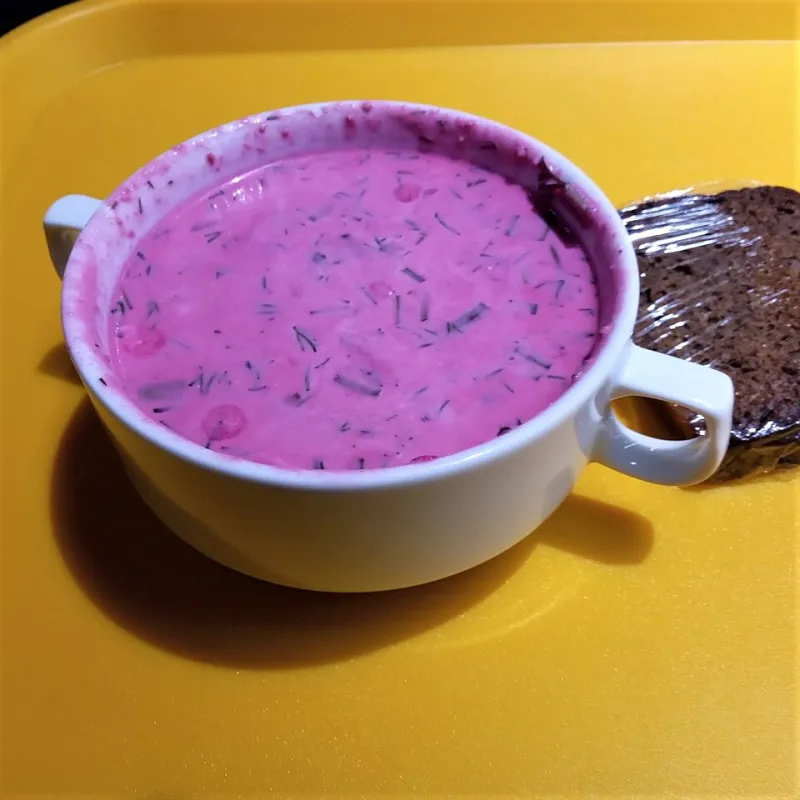
Photo: Vi Ko, CC BY-SA 4.0, via Wikimedia Commons
Somewhere in Brooklyn, a food content creator with four hundred thousand followers is filming a crock of fermenting beet kvass. The caption reads: ancient Slavic probiotic magic — your gut will thank you. The video will accumulate two million views in seventy-two hours. The word "Orthodox" does not appear anywhere in the post. Neither does the word "fast."
Somewhere in Pennsylvania, an eighty-three-year-old woman named Halyna has been making that same kvass every year since October, as her mother did, and her mother's mother before her — not because fermentation is fashionable, but because the forty-day Nativity fast begins in November and her family does not serve meat at the table during that period. The recipe is inseparable, in her understanding, from the liturgical calendar that governs it. She has never posted it online. She does not know it has gone viral.
This is the central tension animating one of the more unexpected cultural phenomena in contemporary American food media: the rapid proliferation of traditional Polish Orthodox culinary practices — fasting foods, fermented preparations, Lenten ceremonial dishes — across platforms and audiences that have no connection to, and frequently no knowledge of, their spiritual provenance.
A Culinary Tradition Rooted in Theological Discipline
To understand what is at stake in this conversation, it is necessary to understand what Polish Orthodox fasting cuisine actually is and why it exists. Orthodox Christianity observes among the most extensive fasting disciplines of any Christian tradition — periods during which the faithful abstain from meat, dairy, fish, oil, and wine according to schedules that, taken together, cover roughly half the calendar year. The Lenten fast preceding Pascha is the most demanding; the Nativity and Apostles' fasts follow their own rhythms.
This discipline is not incidental to Orthodox theology. It is, within the tradition, a bodily participation in the spiritual life — a training of the flesh in obedience to the spirit, a solidarity with the poor, and a preparation of the whole person for the encounter with God in the liturgical celebration that follows. The foods developed within this tradition — meatless borscht, mushroom-stuffed pierogi, fermented grain drinks, buckwheat preparations, fish dishes for days when the fast is relaxed — are not merely culinary artifacts. They are the material expression of a theological anthropology.
When that material expression circulates without its theological frame, something is lost. The question is how much, and whether anything is gained in exchange.
The Wellness Pipeline and Its Discontents
The pathway by which Polish Orthodox fasting foods have entered mainstream American food culture runs primarily through the wellness industry's longstanding fascination with fermentation, ancestral eating, and what food writers have taken to calling "peasant wisdom." Beet kvass, consumed during Orthodox fasts for centuries as a nutritious, preservable, and canonically permissible drink, has been adopted by the gut-health community as a probiotic powerhouse. Żurek — the sour rye soup central to Polish Easter tables — circulates in food media as a "traditional Eastern European detox broth." Lenten mushroom dishes appear on plant-based cooking platforms as examples of "sustainable protein traditions."
None of these framings are technically false. The foods in question are nutritious, fermented, and plant-forward. But the framing is radically incomplete, and the incompleteness is not neutral. It presents the product while erasing the practice — the fasting, the liturgical calendar, the communal discipline — that gave the product its meaning and, arguably, its character.
Anna Wiśniewska, who teaches food history at a university in the Mid-Atlantic region and is herself a member of a Polish Orthodox parish, is precise about the problem. "There is a long tradition in American food culture of extracting techniques and recipes from their communities of origin and presenting them as discoveries. What is distinctive about this case is that the erasure is not merely ethnic — it is theological. The spiritual intention that shaped these recipes over centuries is being replaced by a nutritional intention that would have been entirely foreign to the people who developed them."
Voices from Within the Community
Opinion within Polish Orthodox communities regarding the viral moment is genuinely divided, and that division is worth taking seriously rather than flattening into a simple narrative of appropriation versus appreciation.
Some community members express cautious optimism. Deacon Tomasz, who serves a parish in the Pacific Northwest and maintains an active social media presence focused on Orthodox Christian life, sees the phenomenon as an unexpected evangelistic opening. "When someone discovers beet kvass through a wellness influencer and then searches for its origins, they sometimes find us. I have had conversations with inquirers who arrived at our parish door because they followed a recipe back to its source. I will not dismiss that."
His perspective reflects a missionary instinct that has always been present within Orthodox Christianity — the conviction that beauty, rightly understood, draws souls toward its ultimate source. If the beauty of a fermented beet drink can serve as a first point of contact between a secular American and an ancient Christian tradition, the encounter may have value even if its initial frame was impoverished.
Others are considerably less sanguine. Maria Kowalczyk, whose family has attended the same Polish Orthodox parish in Connecticut for four generations, describes a particular discomfort when she encounters content creators presenting Lenten recipes as lifestyle choices. "My grandmother fasted because she believed she was preparing her soul to receive the Risen Christ. That is not a wellness practice. That is an act of faith. When you take the food and leave the faith, you are not honoring the tradition. You are consuming it."
Her use of the word "consuming" is pointed. The commodification of cultural and religious practices by digital media is not a new concern, but it takes on particular sharpness when the practice in question is itself a discipline of restraint — when the sacred act being aestheticized is, at its core, an act of not consuming.
Preservation or Dilution? A Question Without a Simple Answer
The honest answer to the question Cerkiew America poses — whether viral exposure helps preserve Polish Orthodox culinary heritage or reduces it to aesthetic consumption — is that it does both simultaneously, and the proportions vary by context.
There is legitimate preservation value in documentation. Recipes that might otherwise exist only in the handwritten notebooks of elderly parishioners are being transcribed, filmed, and distributed to audiences that would never have encountered them through traditional communal channels. Several Polish Orthodox parishes have begun, partly in response to the viral moment, to develop their own digital cooking content — content that explicitly names the theological context, the liturgical calendar, and the community behind the food. This represents a meaningful reclamation of narrative.
At the same time, the scale disparity between secular food media and parish-produced content is vast. For every video in which a Polish Orthodox woman explains that mushroom borscht is a Lenten dish consumed in preparation for Pascha, there are thousands of videos presenting the same dish as a heritage soup with no further context. The aggregate cultural impression is shaped overwhelmingly by the secular framing.
What the Community Owes Itself
The Polish Orthodox community in America cannot control what secular food media does with its culinary inheritance. It can, however, control its own engagement with the public conversation. That means producing content that is beautiful, accessible, and theologically honest — content that presents the food as inseparable from the faith that shaped it, without apology and without condescension toward audiences who arrive knowing nothing of either.
Halyna, the eighty-three-year-old kvass maker in Pennsylvania, was asked what she would want people to know if they encountered her recipe online. She considered the question for a moment before answering. "Tell them it is not magic," she said. "Tell them it is a fast. Tell them what the fast is for. And then give them the recipe."
That, in essence, is the task before the community: to tell the whole story, before someone else tells only part of it.